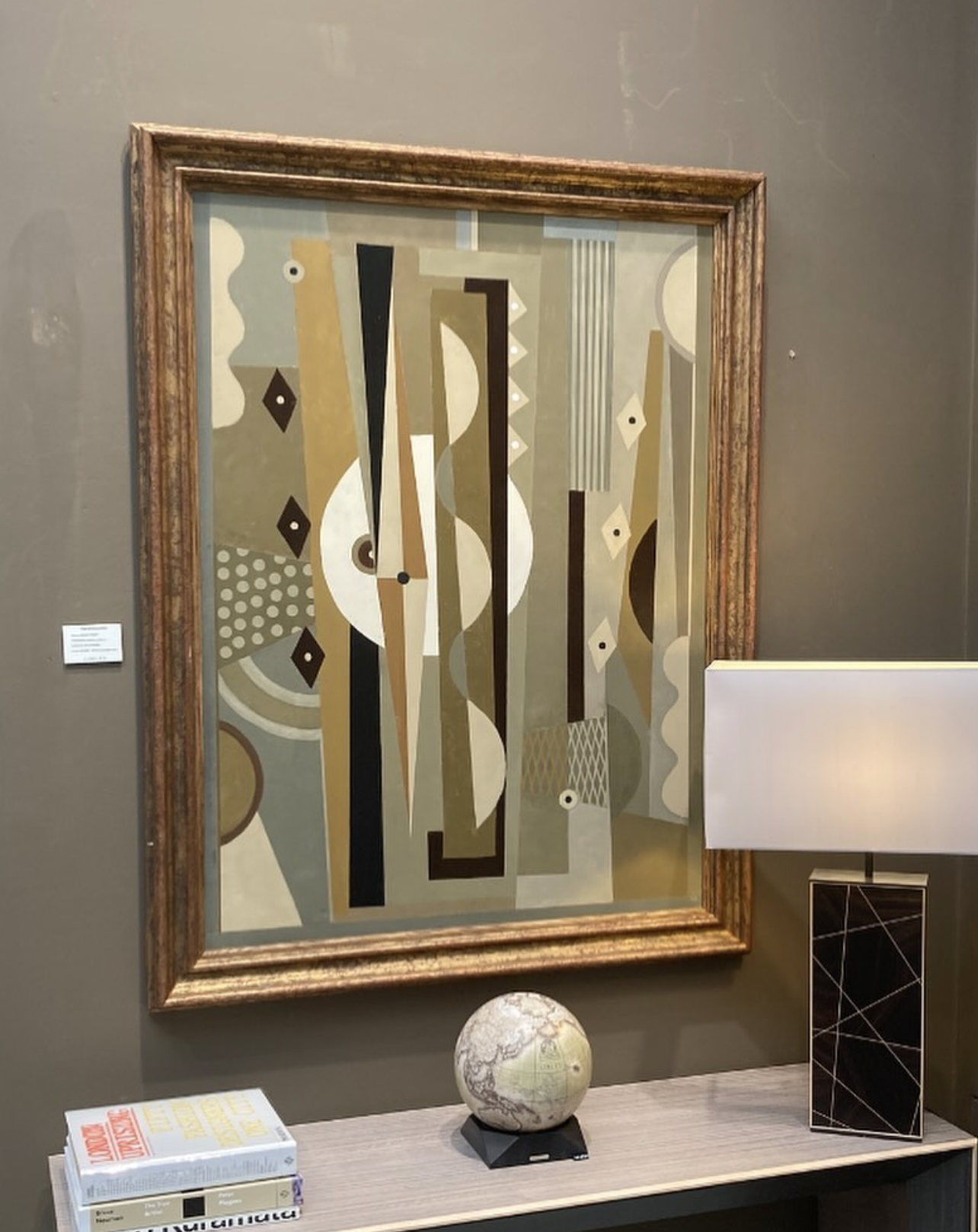
We have separated the paintings into ‘Landscapes’, ‘Abstracts’ and ‘Reliefs’. Unusually for a contemporary painter, all three are equally collected.
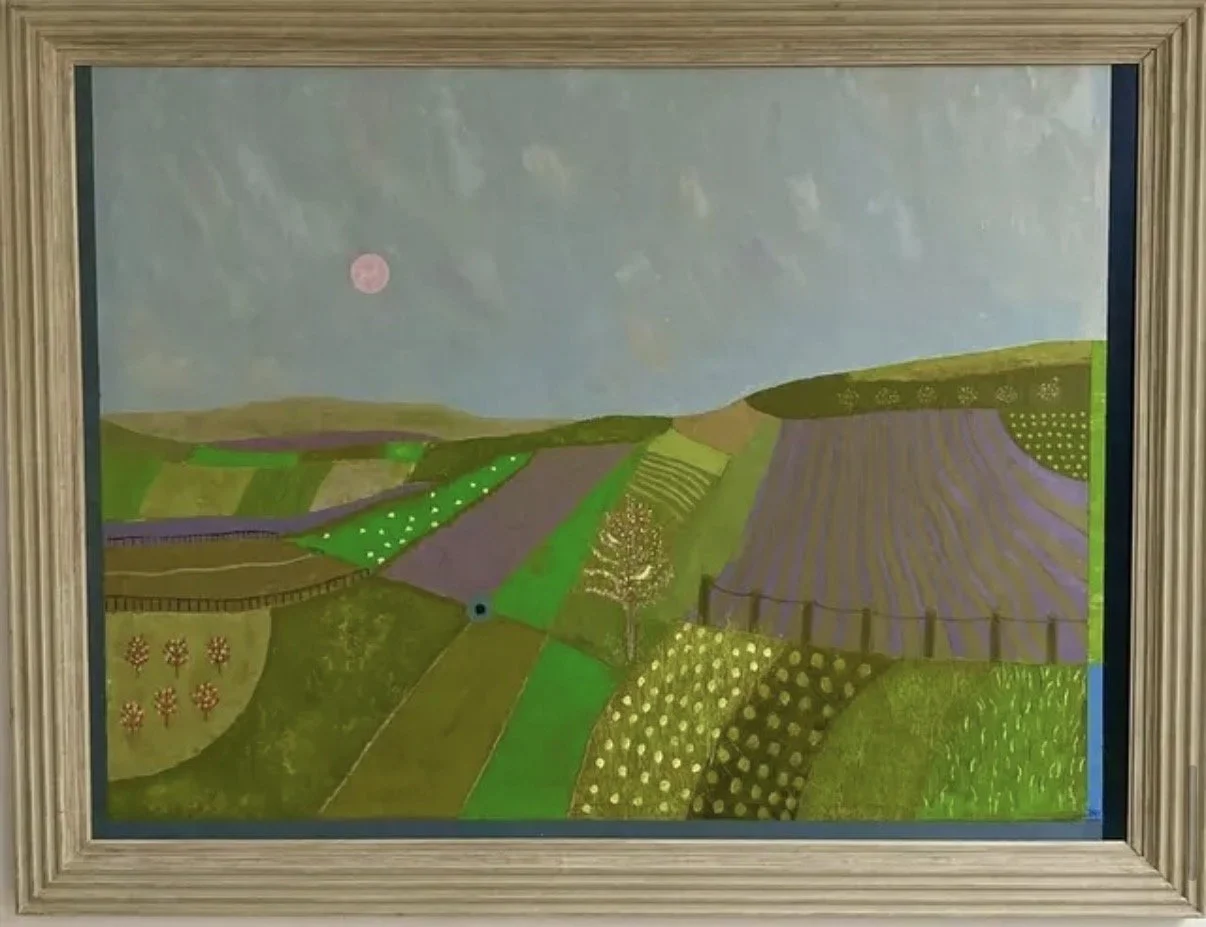
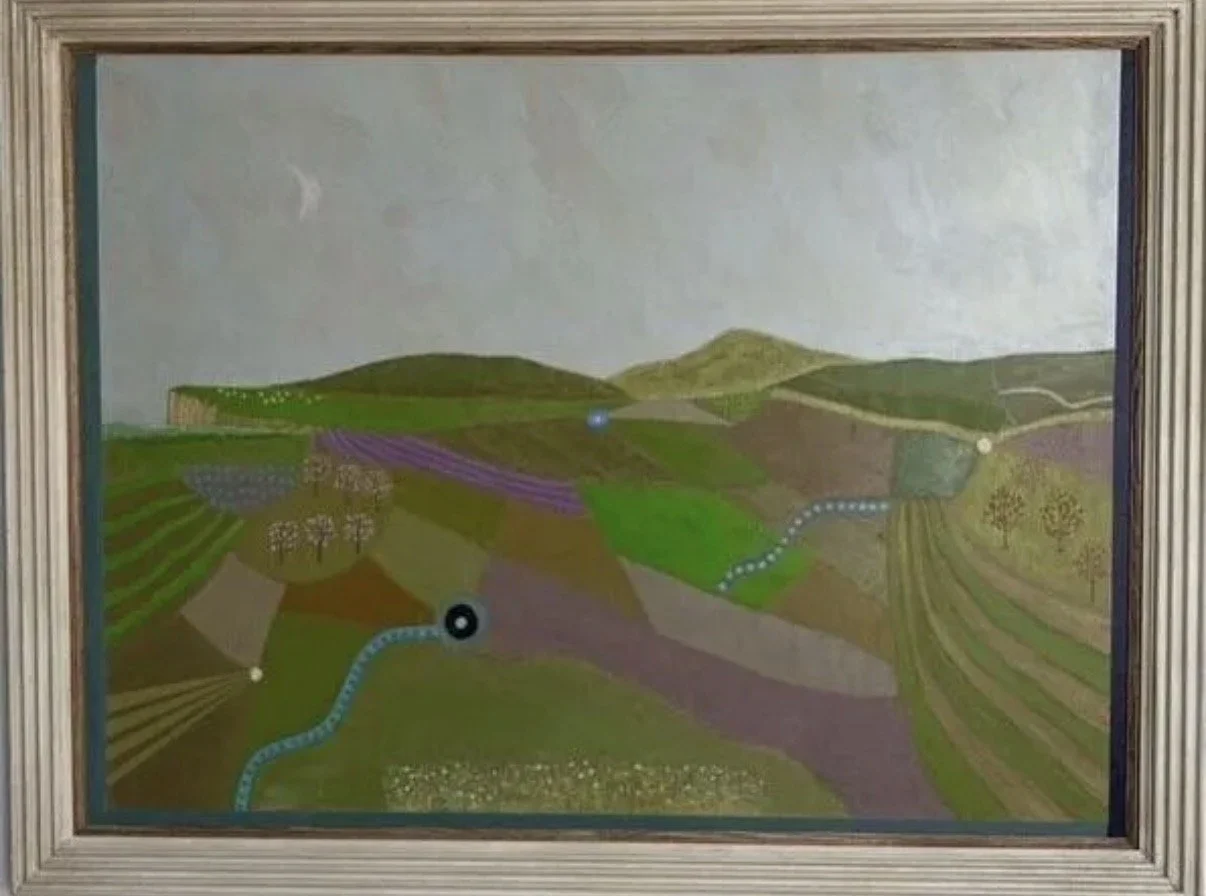
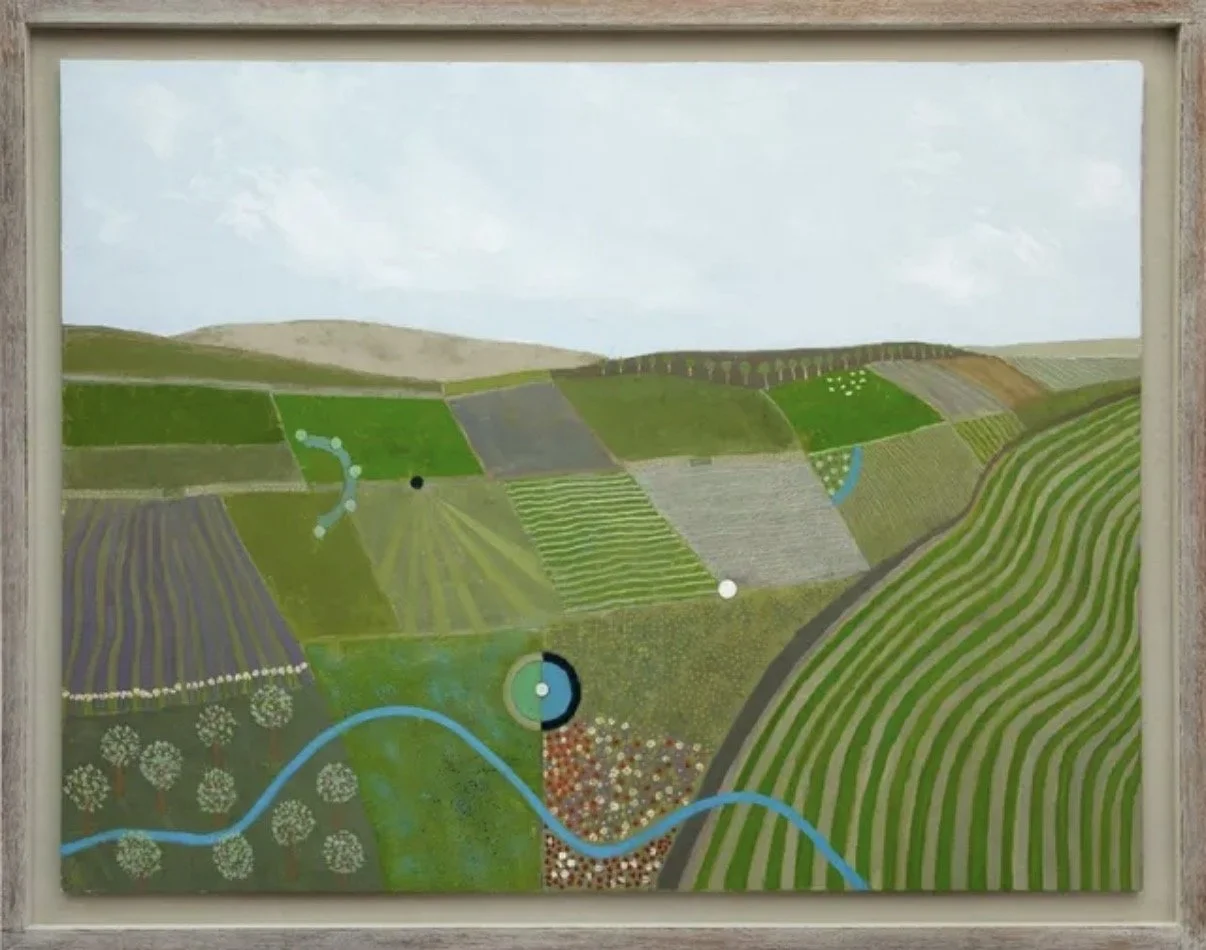
"The landscapes are generally an intuitive evocation of a place. There is an intended correlation between the land and the planetary influences and this is highlighted by various discs and other symbols placed within the context of the work. Bees can see ultra violet light and perhaps some animals and insects can percieve things we humans cannot"
Landscapes
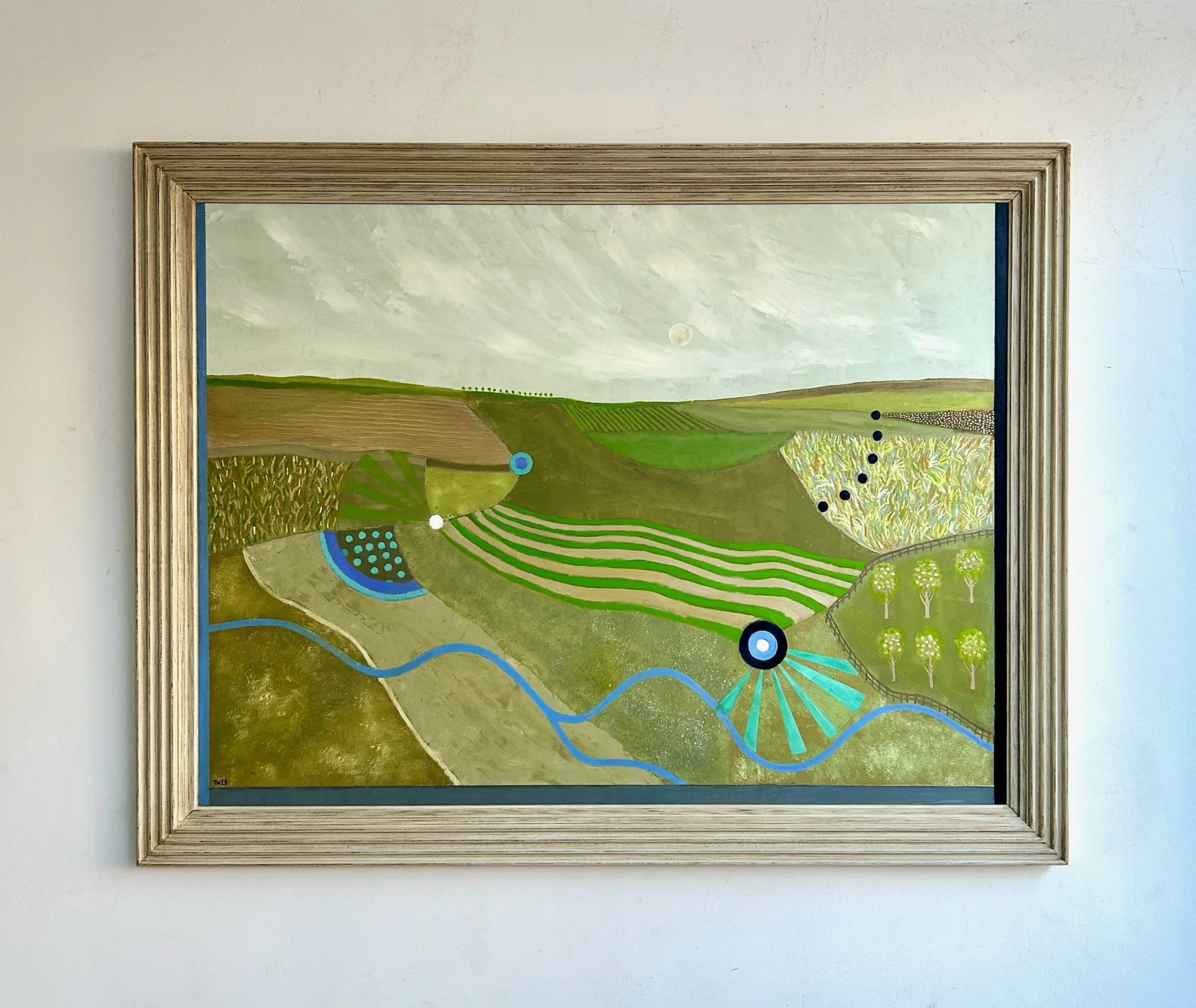
A Wiltshire Stream (Height - 104 cos x Length 34 cms)
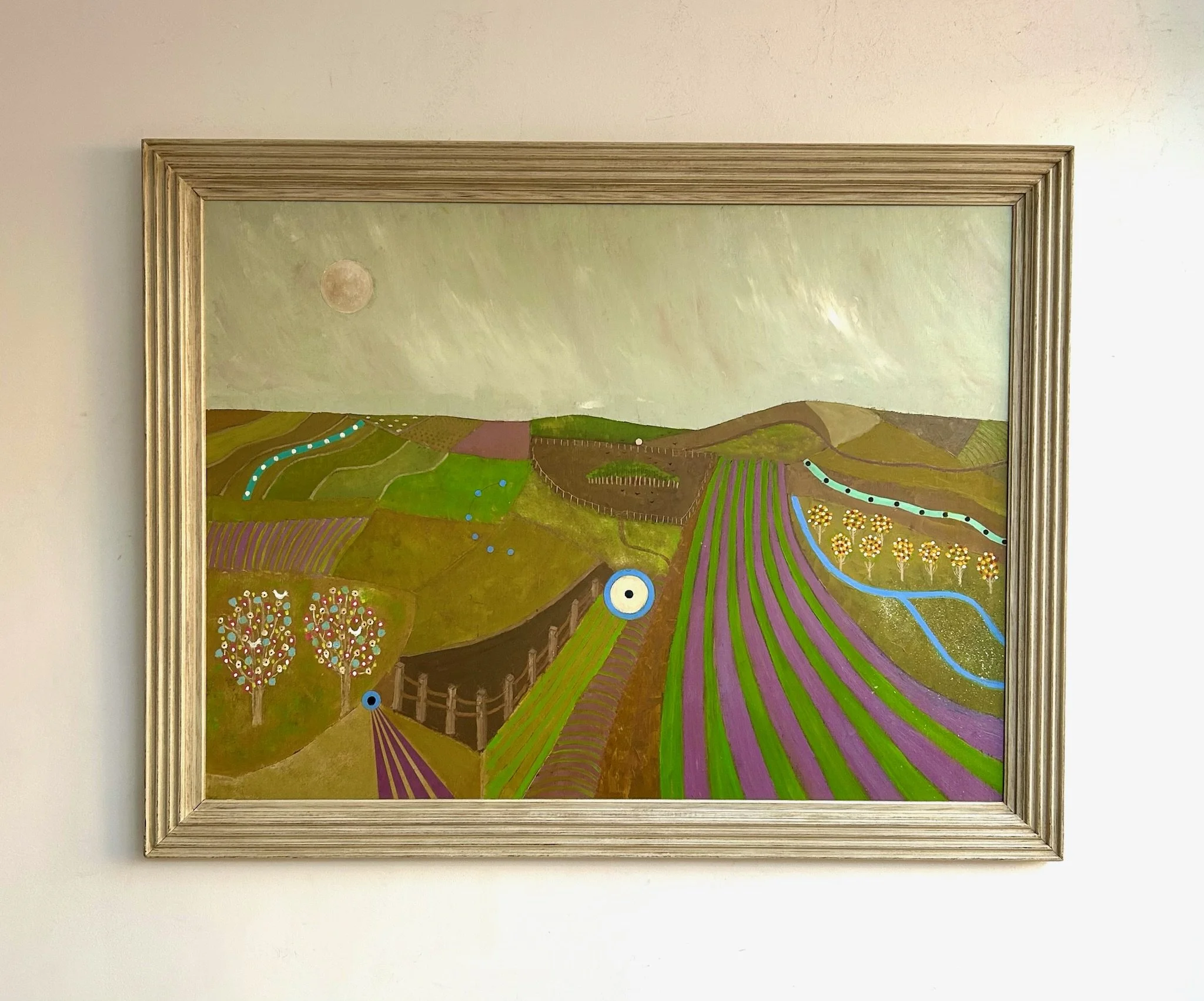
Cotswold Doves (Height - 104cms x Length 134 cms)
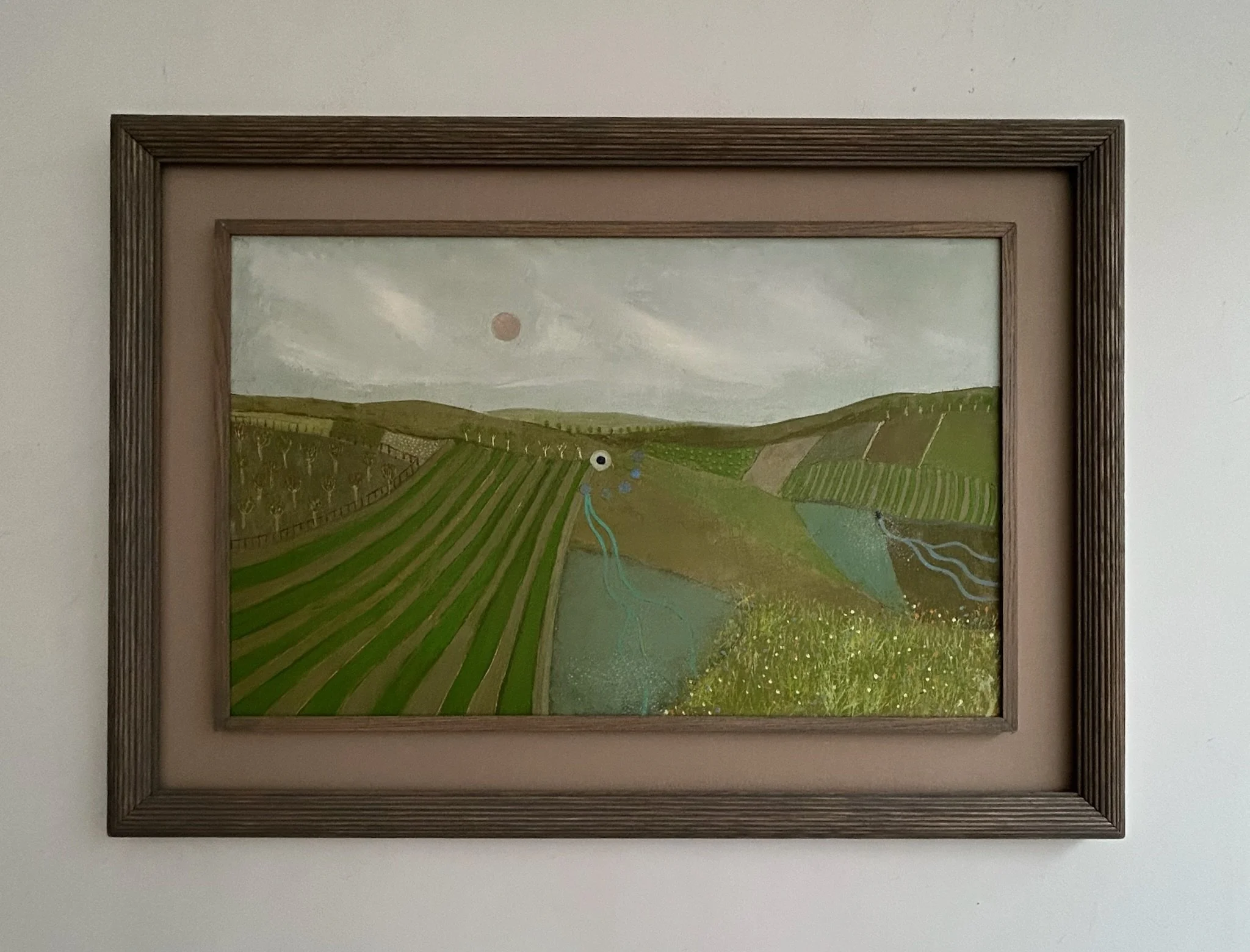
Wiltshire Stream (Height 87 cms x Length 62 cms)
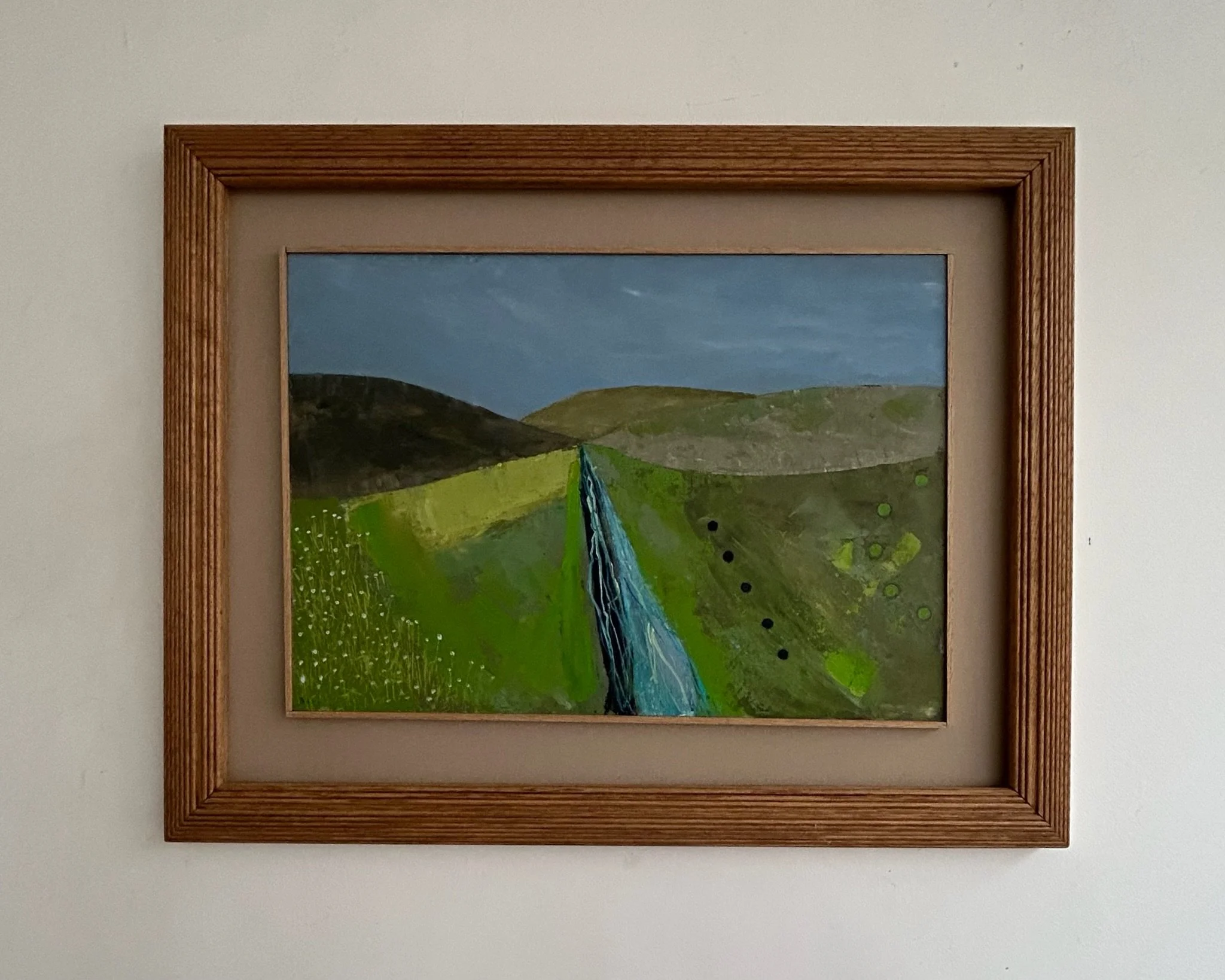
County Wicklow Stream (Height 71 cms x Length 56 cms)
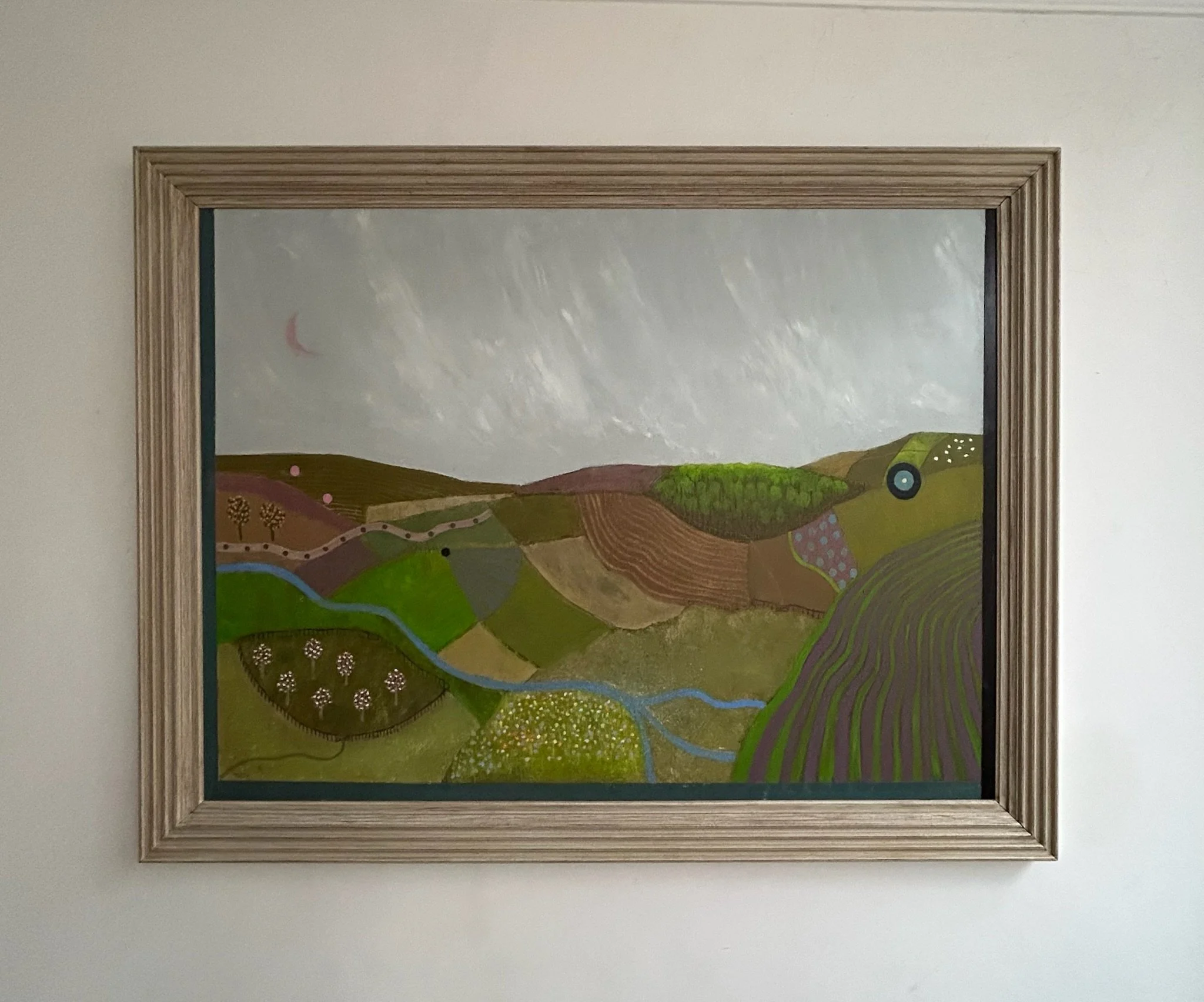
A Cotswolds Copse (Height 134 cms x Lenght 104 cms)
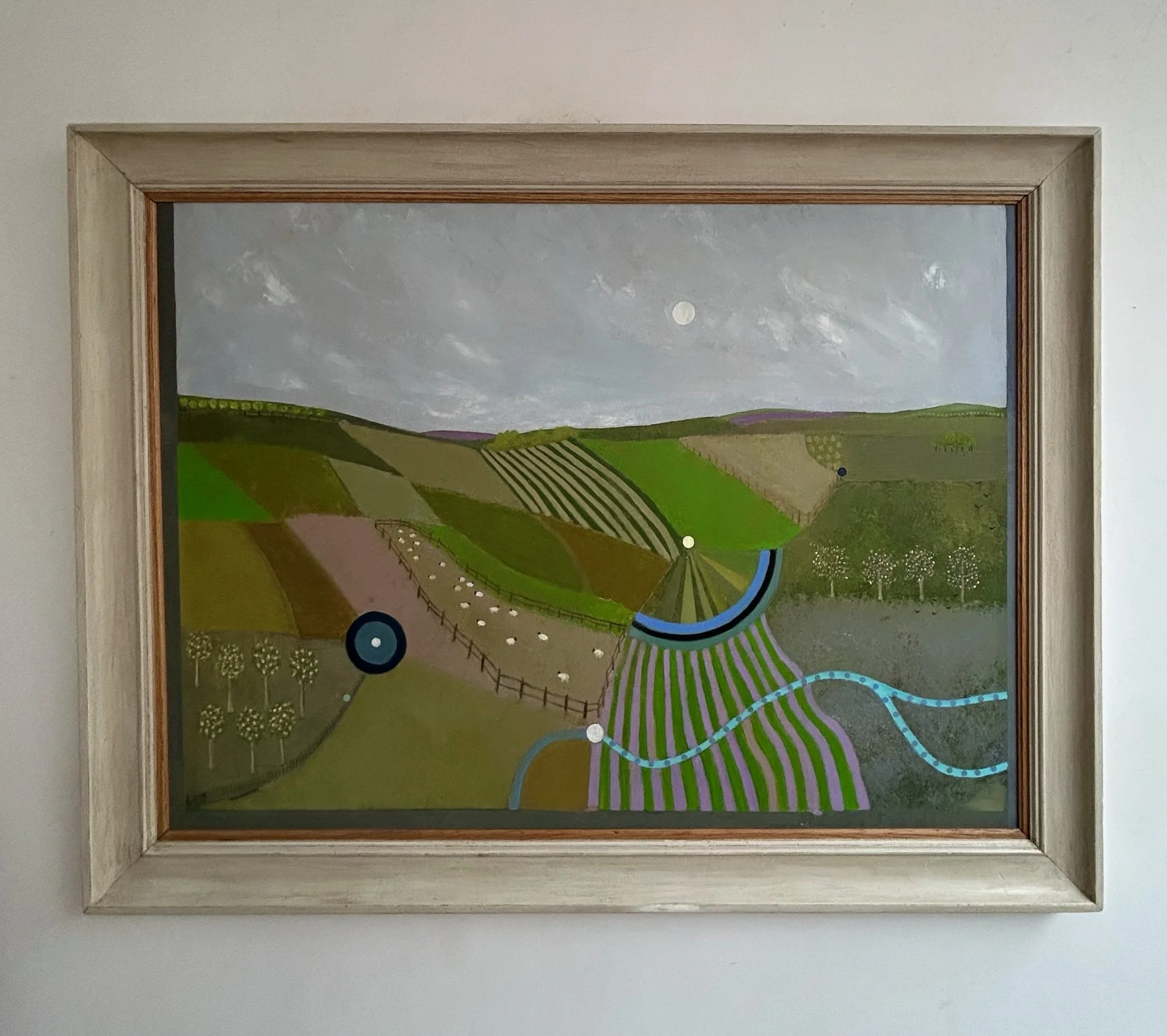
Wiltshire Moon (Height 130 cms x Length 100 cms)
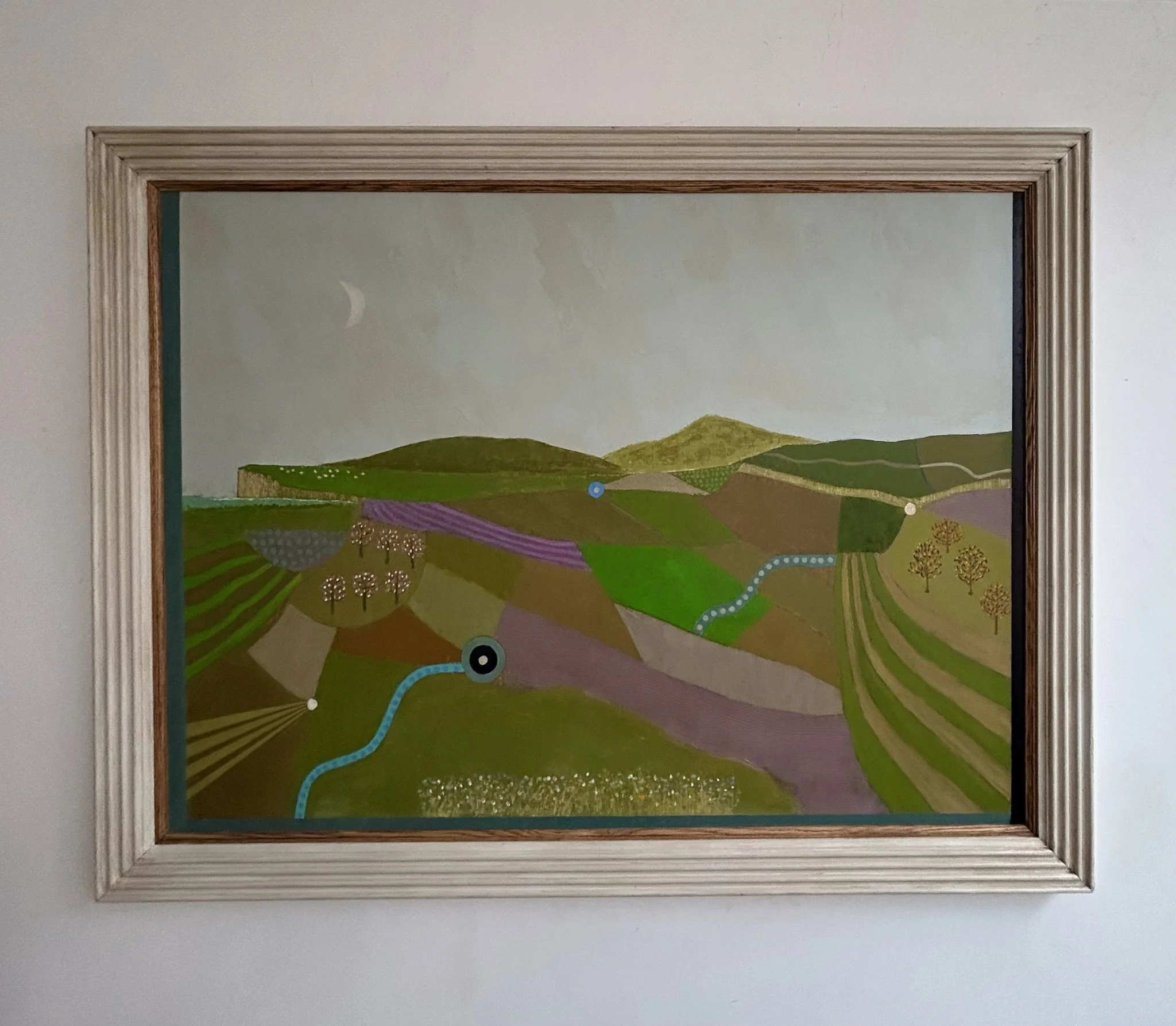
Sussex Evening (Height 134 cms x Length 104 cms)
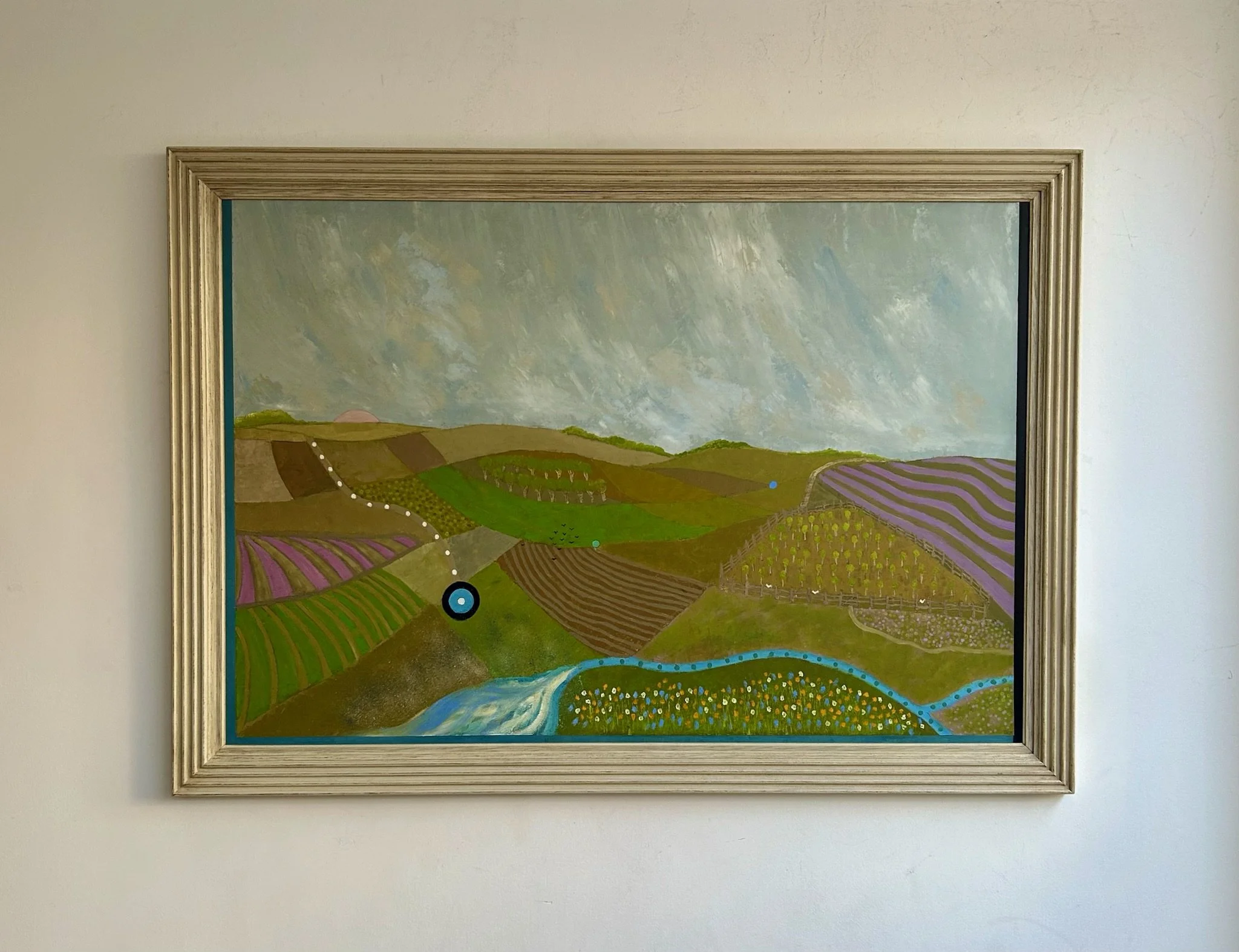
A Cotswold Orchard (Height 150 cms x Length 107 cms) 🔴
Tim Woolcock’s Landscape Works: An Evocation of Place
Woolcock’s landscape paintings emerge from a different impulse than his abstractions, yet share with them a deeply contemplative vision rooted in the meditation practices and philosophical enquiries that inform his entire artistic output. These works form a pillar of his practice, representing an ongoing dialogue between observation and intuition, between the visible topography of the English and Irish countryside and what he describes as “landscapes of the mind.”
The mystical impulse
His landscapes have been consistently described as possessing a mystical quality, a quality that separates them from straightforward topographical representation. Rather than documentary precision, Woolcock pursues the spirit of a place, that ineffable essence which emerges only after prolonged contemplation and daily habitation. His practice of long walks through County Carlow, County Wicklow, Dorset, Wiltshire and the West Country serves as direct nourishment for this spiritual investigation, yet the paintings themselves are rarely executed plein air. Instead, they crystallise as “intuitive evocations” wrested from memory, dream and the deep interior landscape of his consciousness.
Rich blocks of colour and worked surfaces
The physical execution of the landscape paintings mirrors that of the abstracts: blocks of intensely saturated colour, often Michael Harding hand-made pigments of particular brilliance, are laid down with considerable deliberation, then scored, scratched or abraded to reveal the support beneath. This process of revealing and concealing creates a surface that speaks of time, of reconsideration, of the painter’s hand moving across the board with both spontaneity and control. The viewer encounters not a finished image but the trace of its making, a palimpsest of intention and happenstance.
Geometry woven into the pastoral
What distinguishes the landscape paintings from convention is Woolcock’s integration of geometric and abstract elements within a recognisably figurative field. Fields, streams, horizons and atmospheric effects emerge from fractured planes of colour that recall the Cubist investigations of Braque, yet the compositions never lose sight of their moorings in observed reality. This interweaving of abstraction and representation creates an ambiguity that invites rather than prescribes interpretation. A block of green may read as a field, a meadow or a pure interval of colour; the viewer’s eye moves between these readings.
Celestial symbols and temporal meditation
Most striking is Woolcock’s introduction of small circles and spheres, delicate motifs that float across the painted surface like planetary bodies or the fallen moon. These are deliberate incursions of the cosmic into the terrestrial, symbols of what he terms “interdependent co-origination,” an acknowledgement that without the sun and moon, without vast invisible forces, the English countryside and all upon it would cease to exist. They mark the passage of time in a medium that generally resists temporal notation, and they honour the profound interconnectedness between the terrestrial and the celestial.
Lineage and independence
Woolcock’s landscapes sit squarely within a distinguished lineage of British landscape painters stretching from Samuel Palmer forward through Paul Nash to contemporary figures such as David Hockney, an artist Woolcock deeply admires. Yet he has forged his own voice entirely, moving beyond the Romantic nostalgia of some landscape traditions towards something altogether more austere and philosophically weighted. The scale and proportion of these works present an internal harmony that speaks to Zen principles of balance and emptiness.
The agricultural gaze
More recently, Woolcock has become fascinated by the inadvertent artistry of the farmed landscape itself, the plough lines and grooves that man has directed into the earth, creating patterns of extraordinary organic beauty. This recognition of unintended beauty in the cultivated land speaks to a profound humility before nature, an understanding that human intervention, when sufficiently invisible, becomes almost indistinguishable from natural order. In this patient, contemplative vision, Woolcock’s landscapes achieve their most moving power.
“When painting abstraction I have a general idea of what the painting will be, but with all paintings there's a very great deal of what I call 'chance-dependence' and with these works it is wise never to over-complicate a work. They grow organically. It has been vital to experiment with various colours in order to give the paintings a strong initial impression."
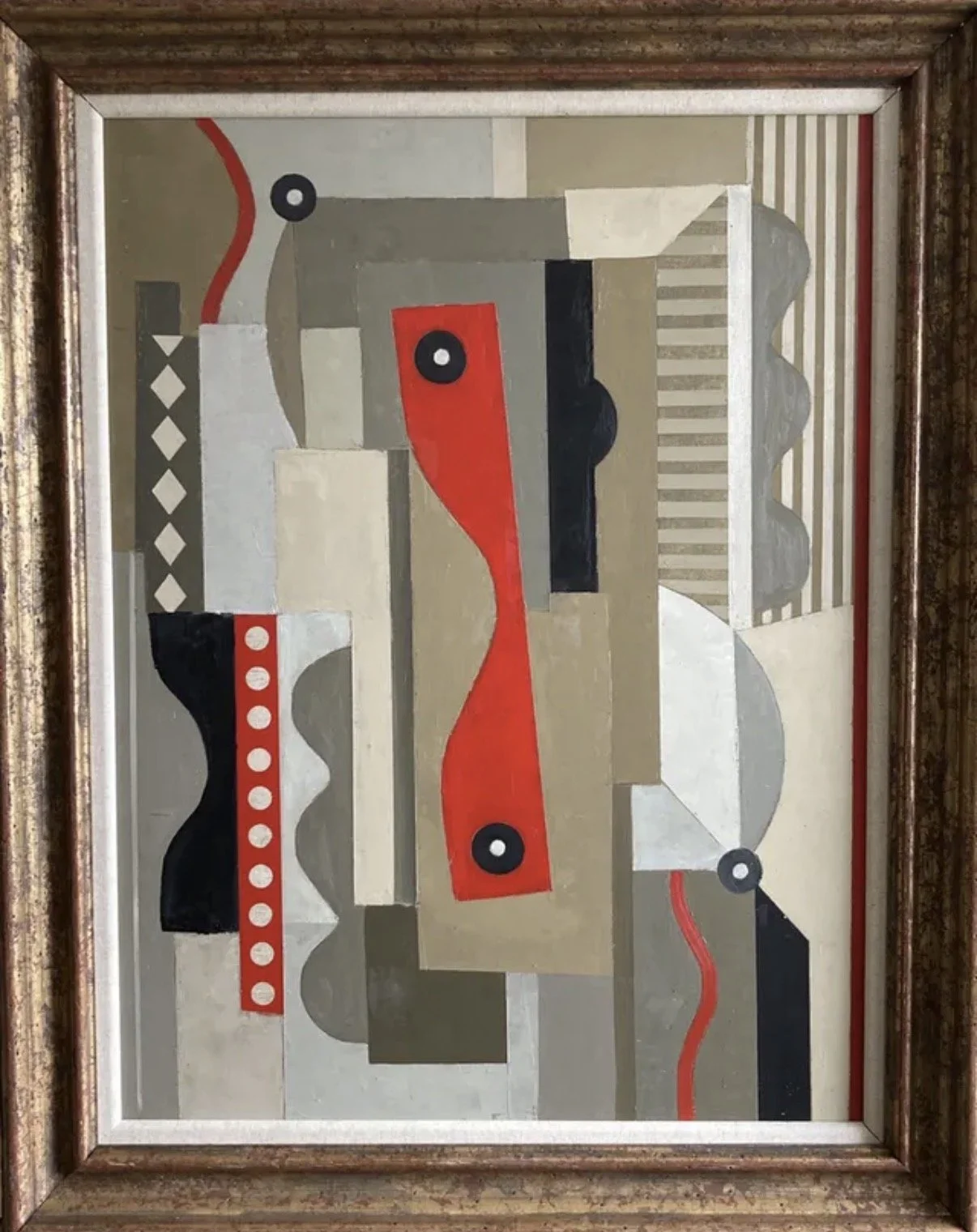
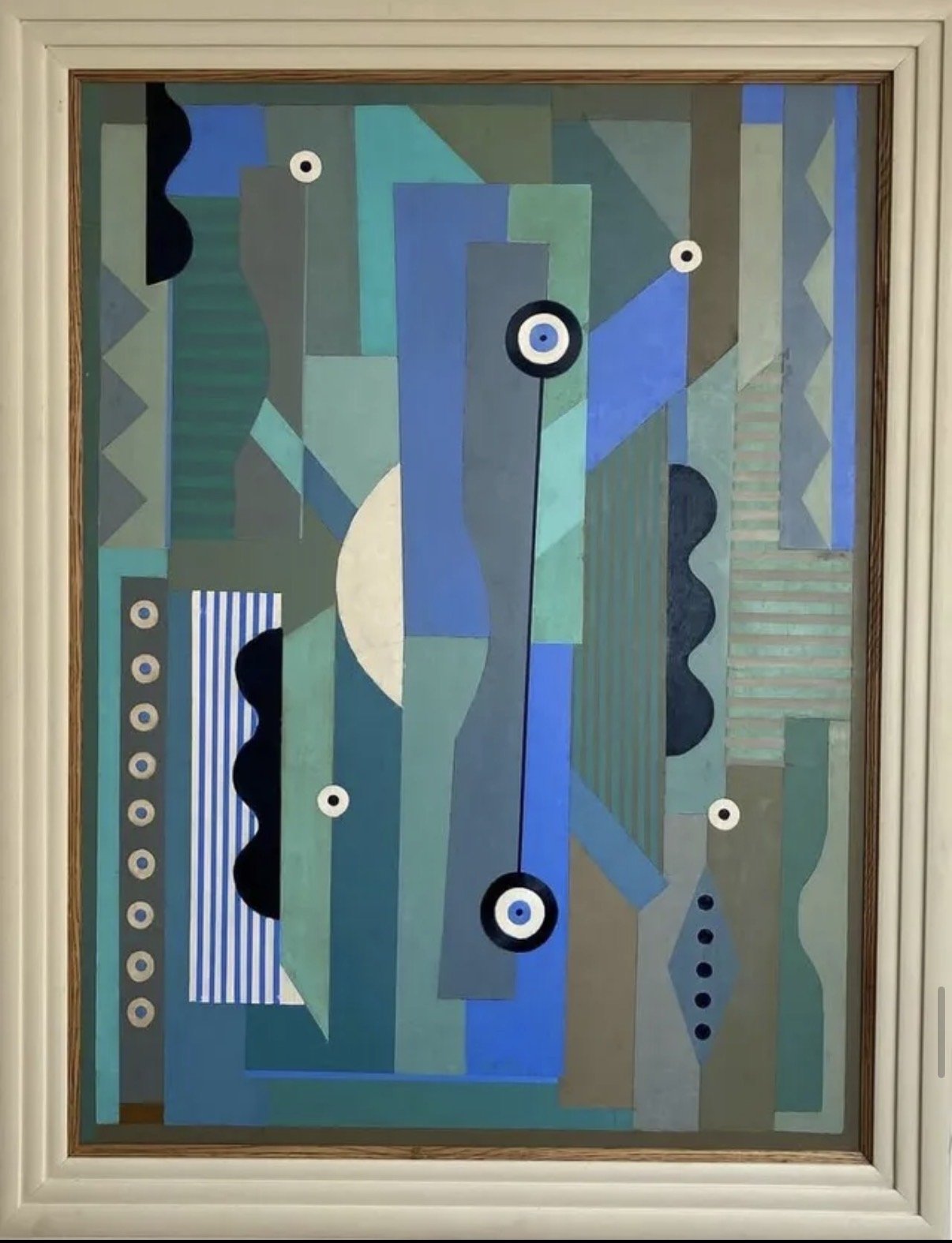
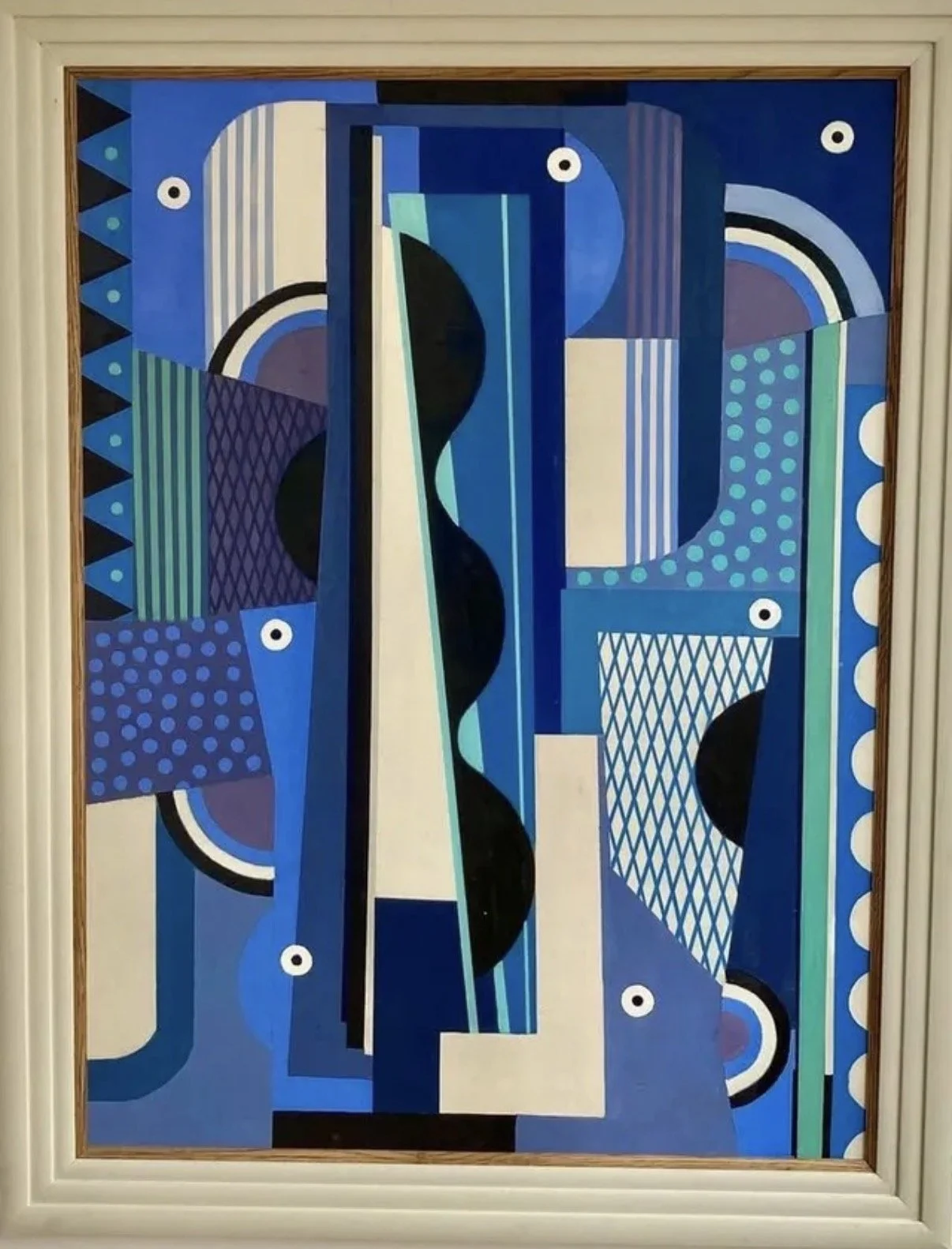
Abstract Works
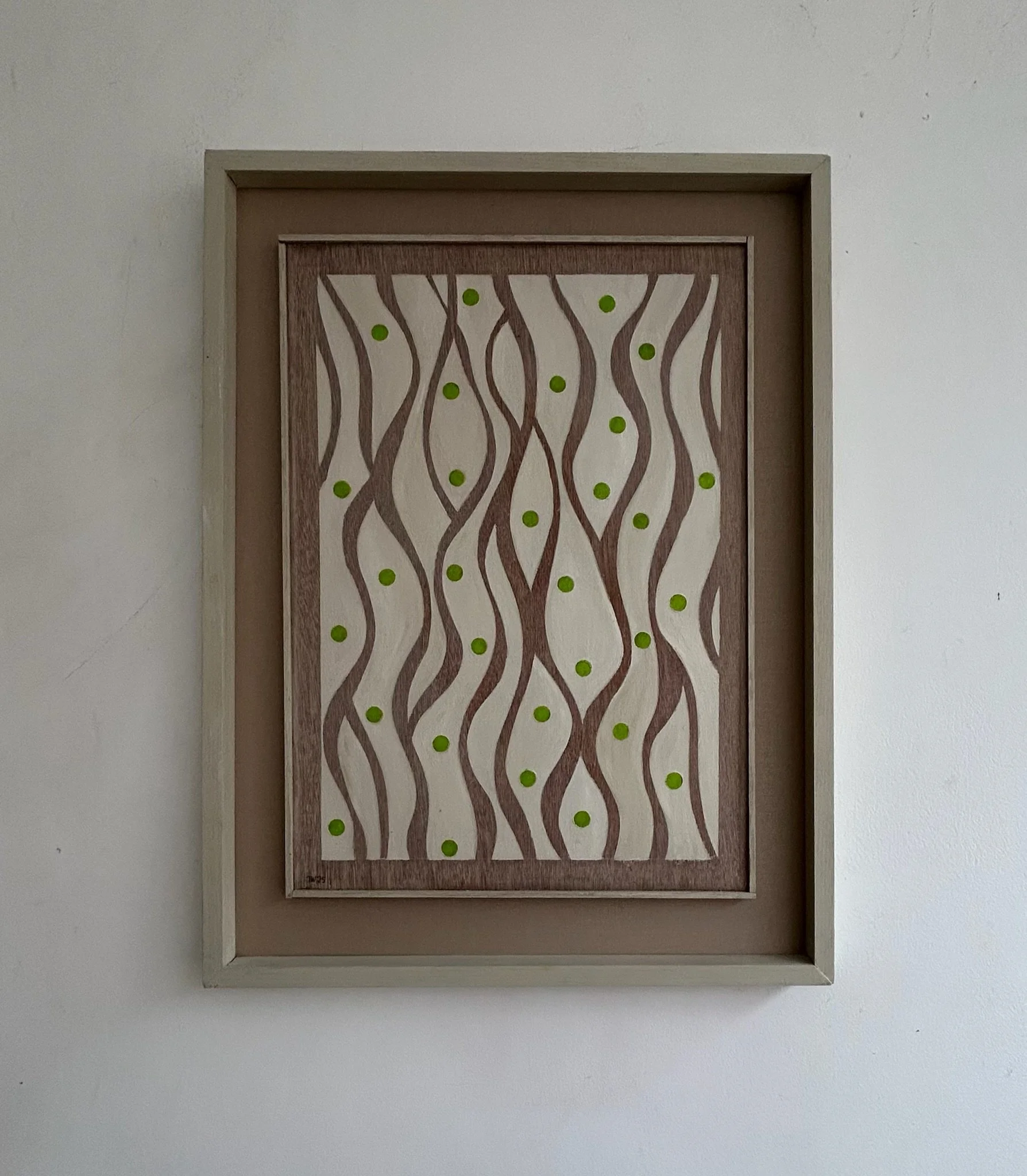
Fluvius (Height 47 cms x Length 62 cms)
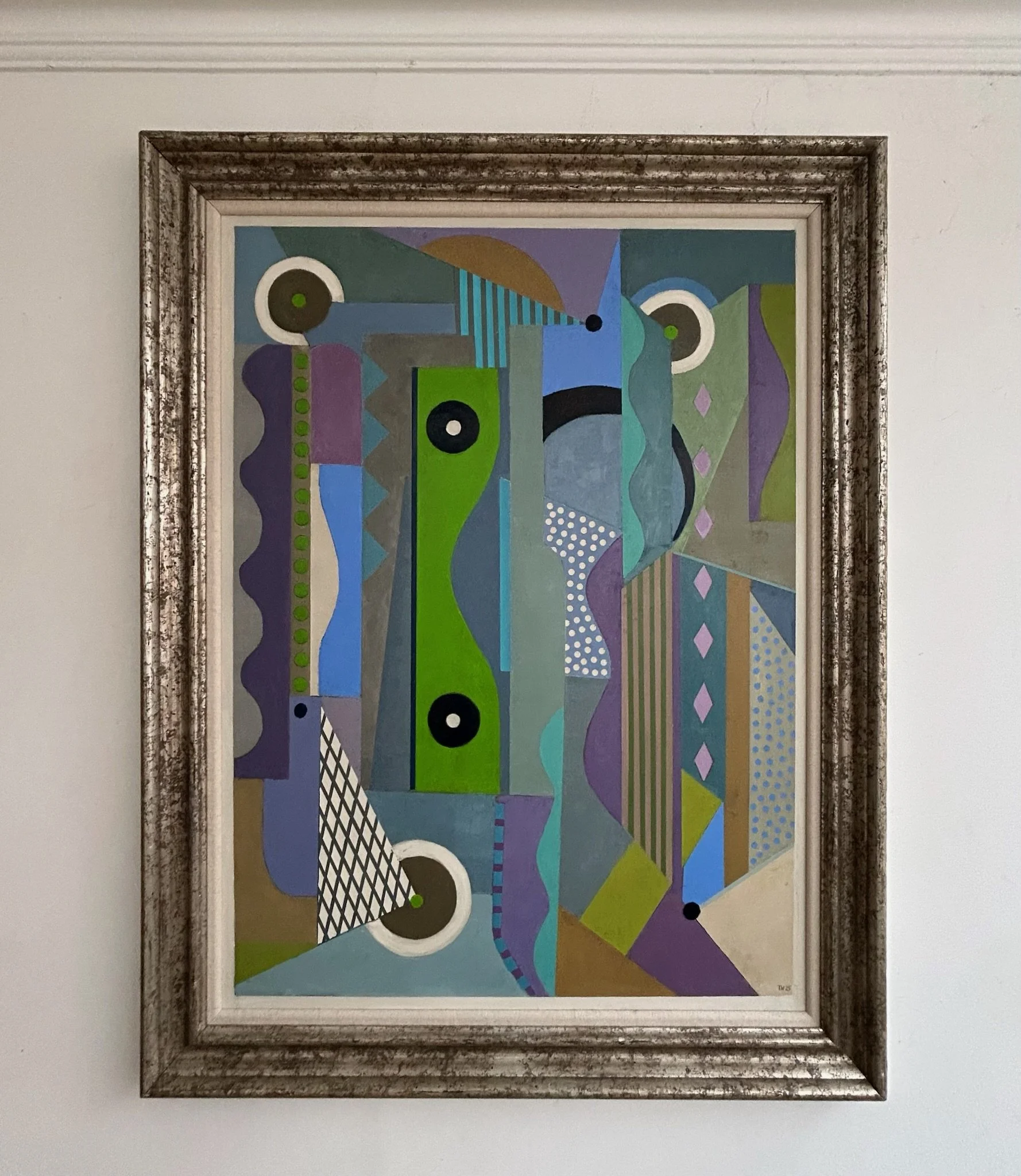
Viridis (Height 93 cms x Length 120 cms) 🔴
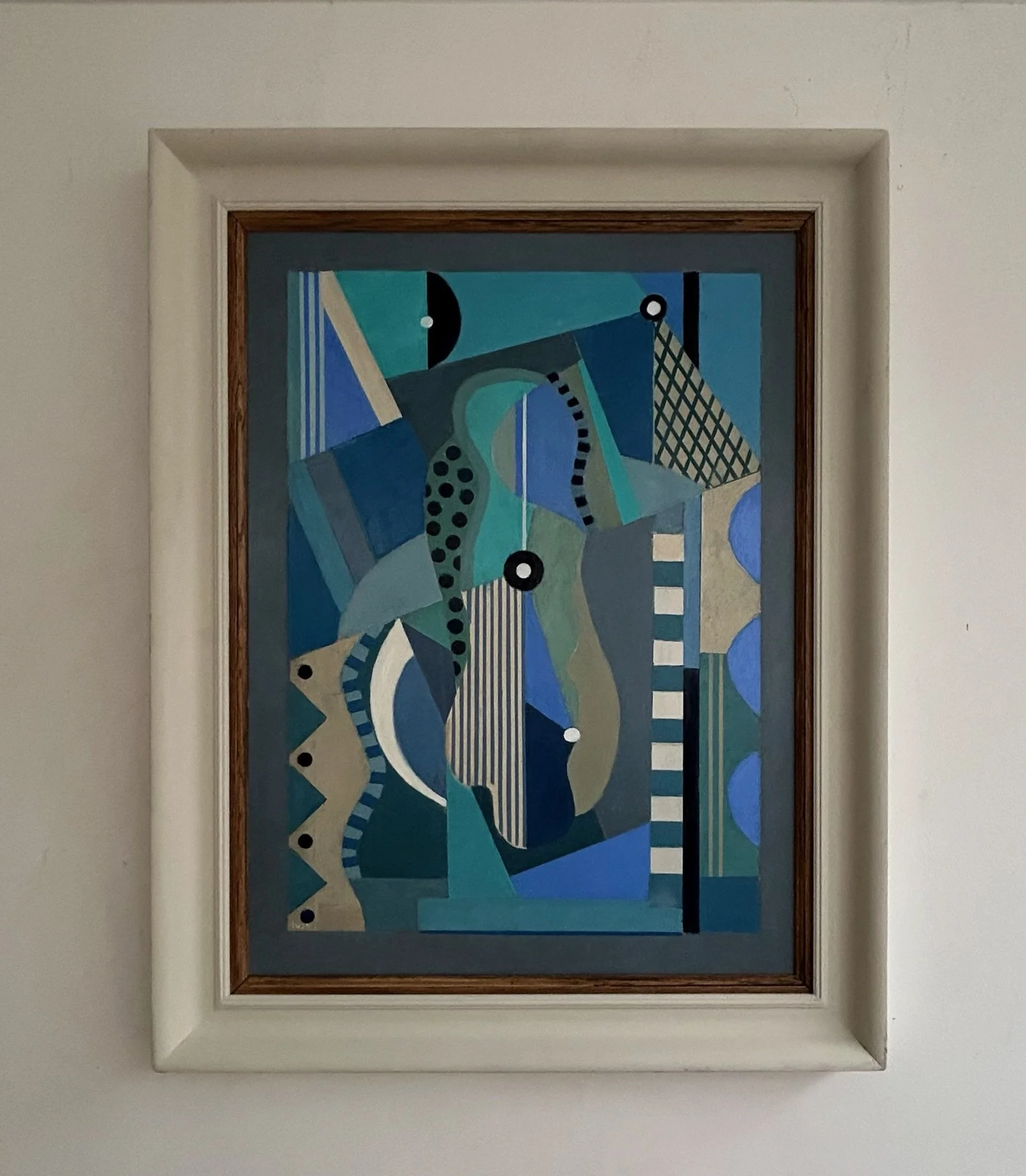
Un Cirque d’ Hiver (Height 61 cms x Length 77 cms) 🔴
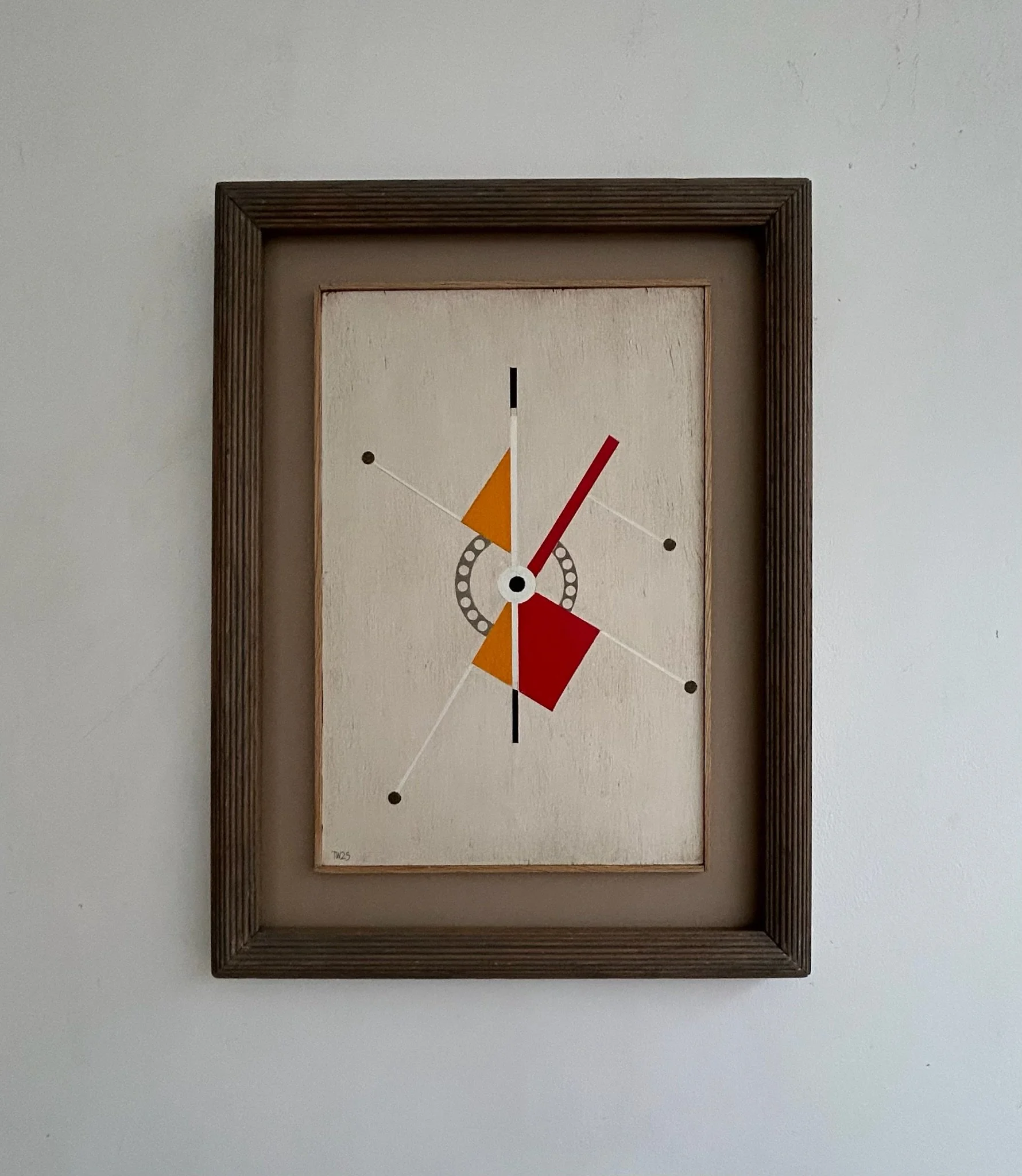
Trajectory (Height 45 cms x Lenght 61 cms)
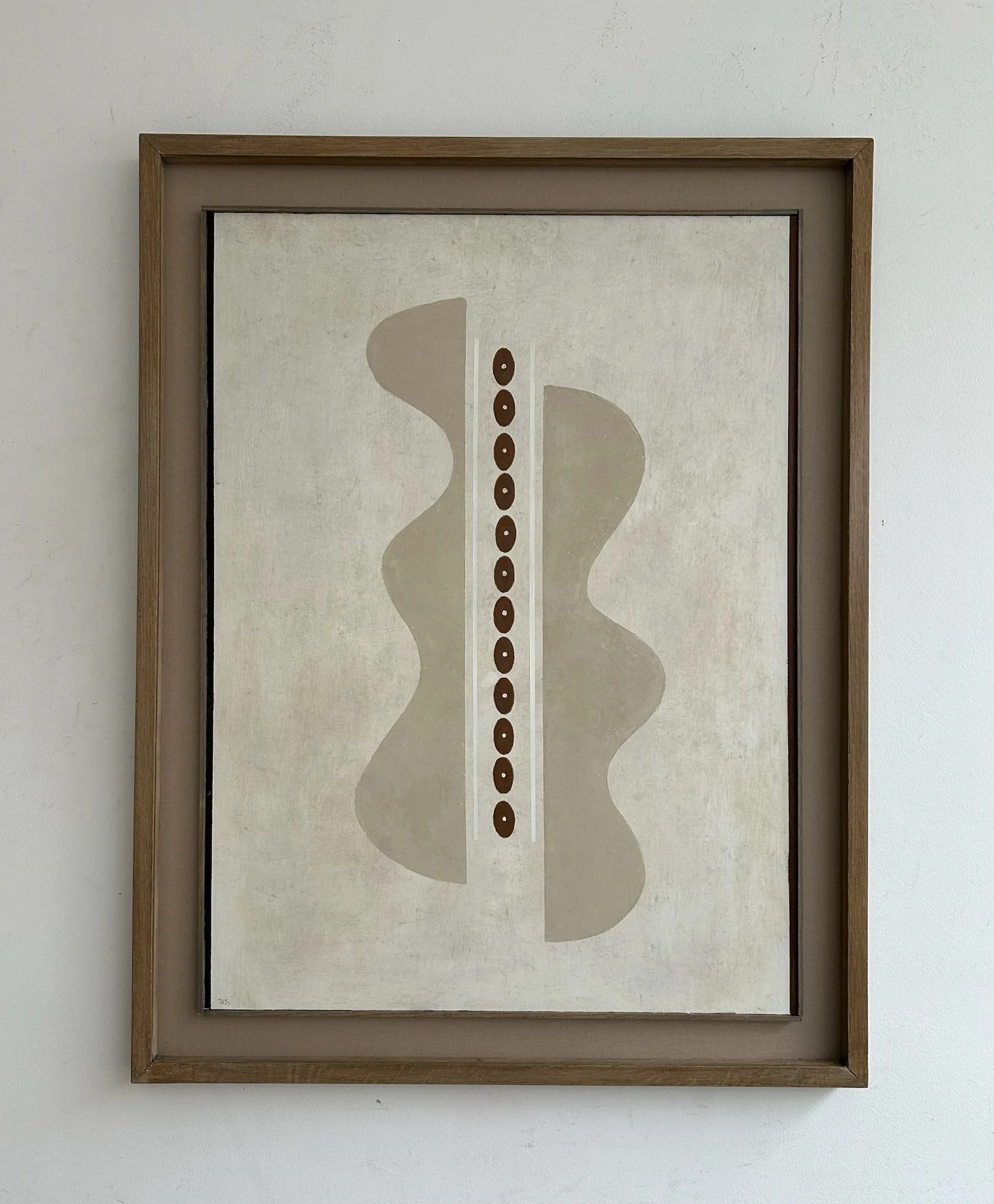
Parable VI (Height 71 cms x Length 92 cms)
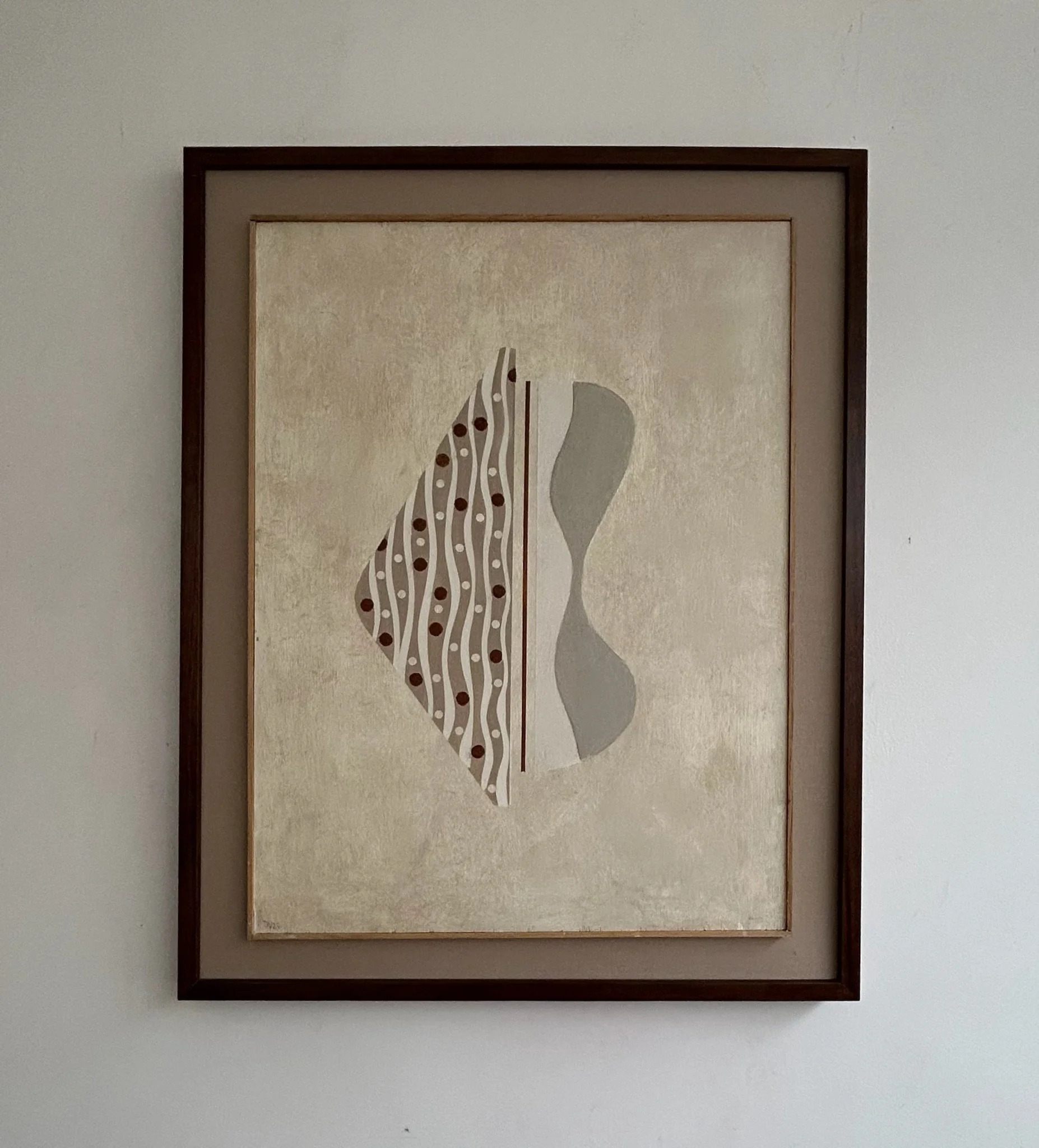
Fluvius II (Height 65 cms x Length 81 cms)
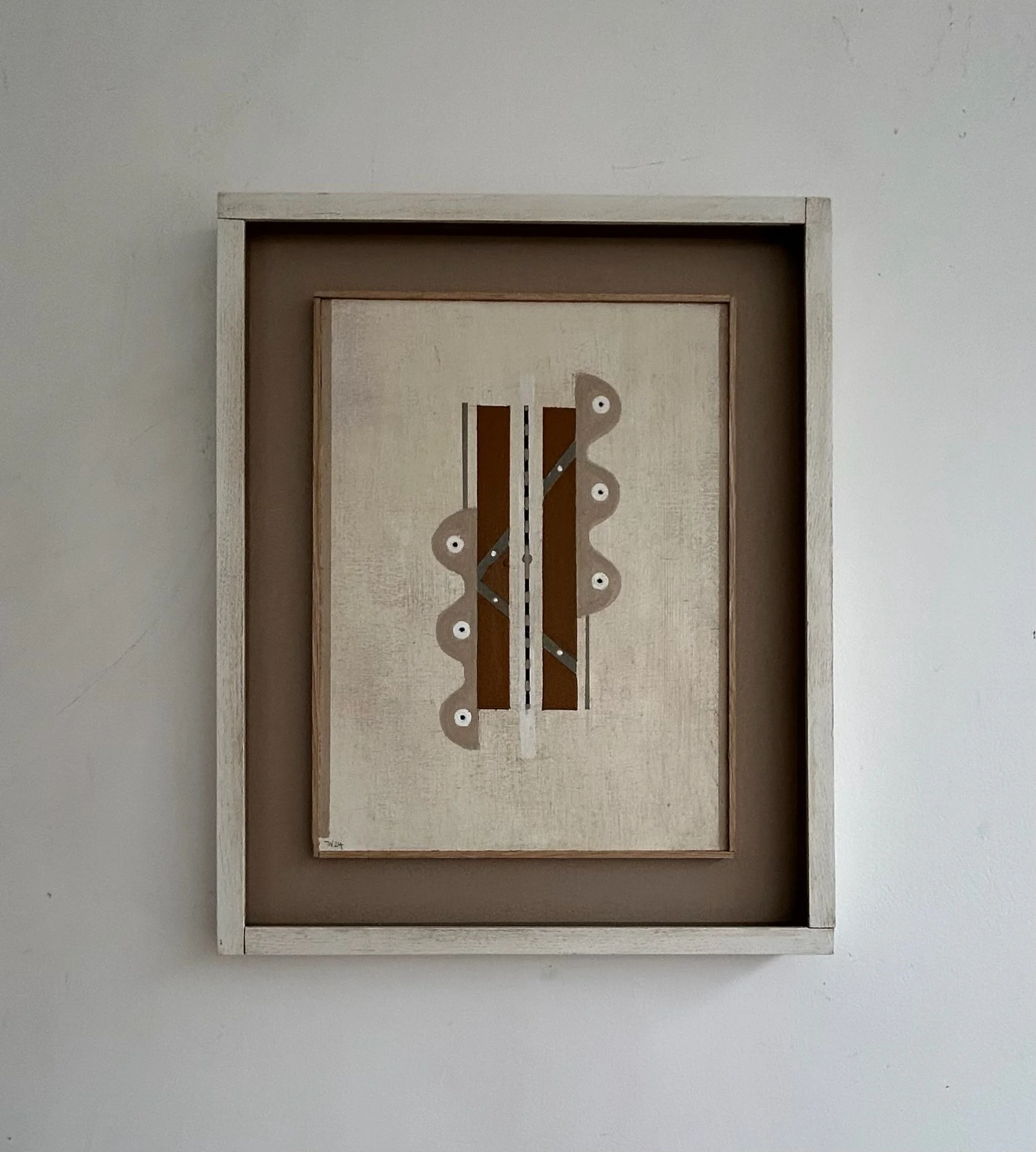
Parable III (Height 44 cms x Length 54 cms)
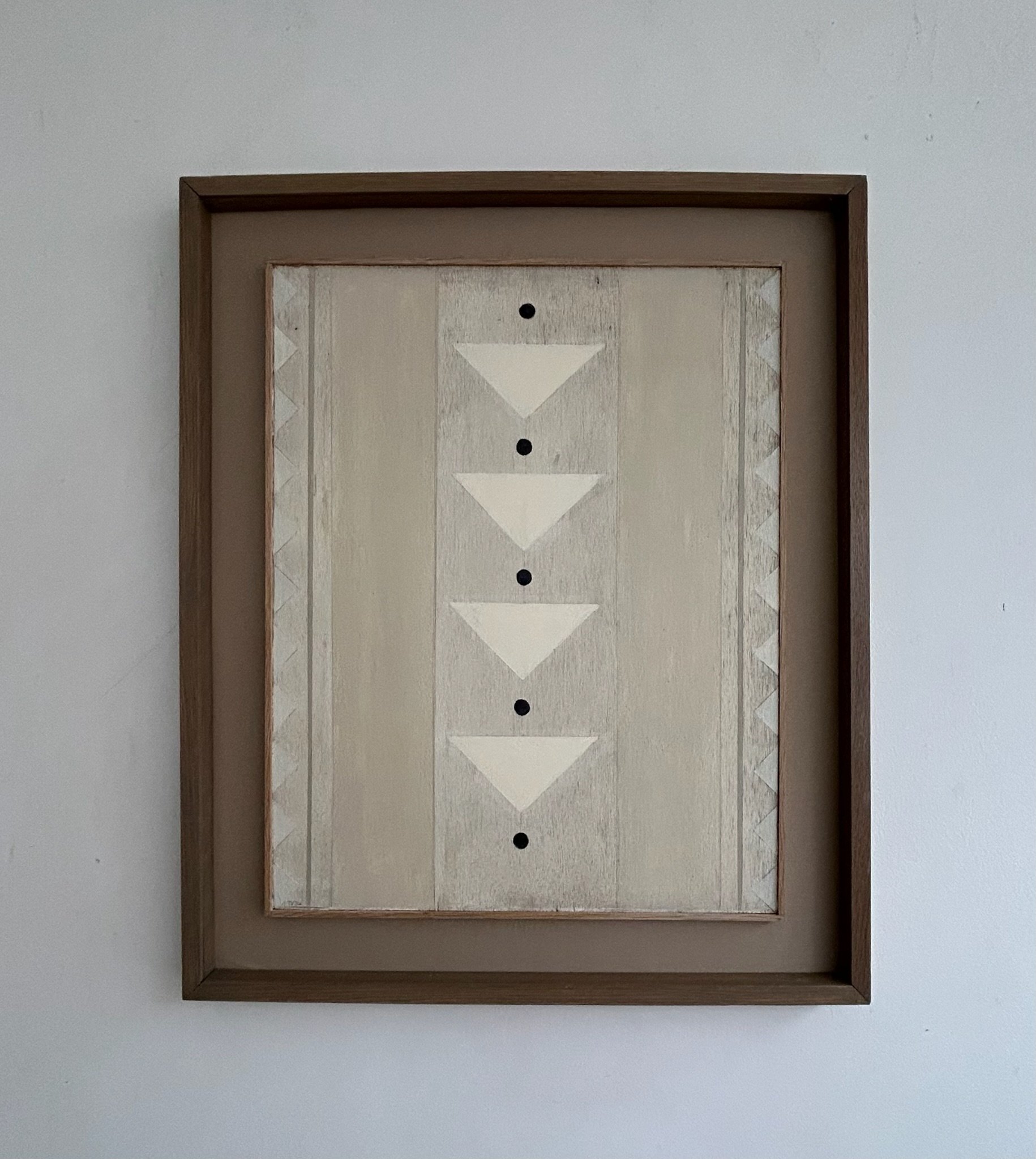
Ascent (Height 53 cms x Length 64 cms) 🔴
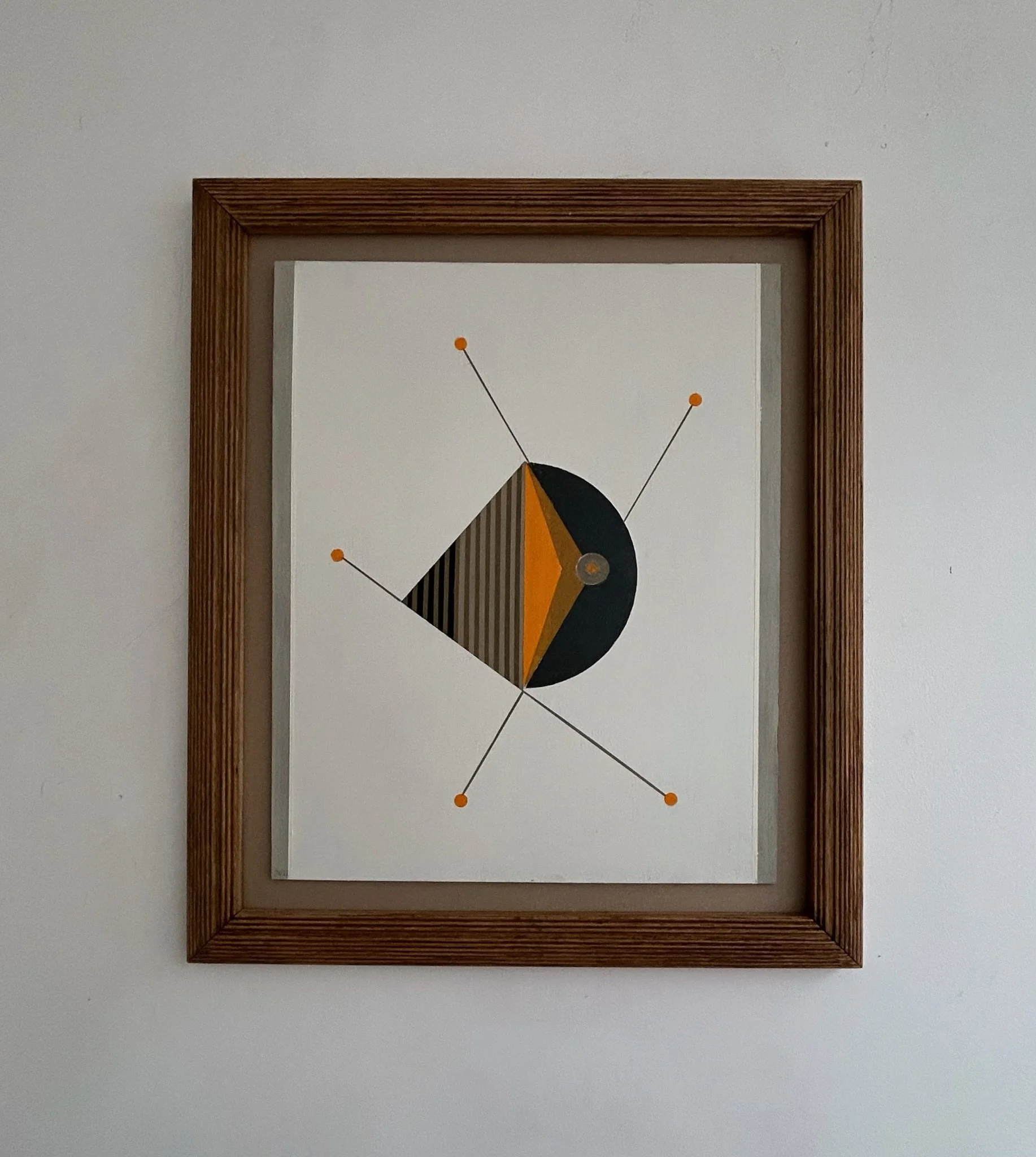
Co-ordinate System (Height 59 cms x Length 69 cms)
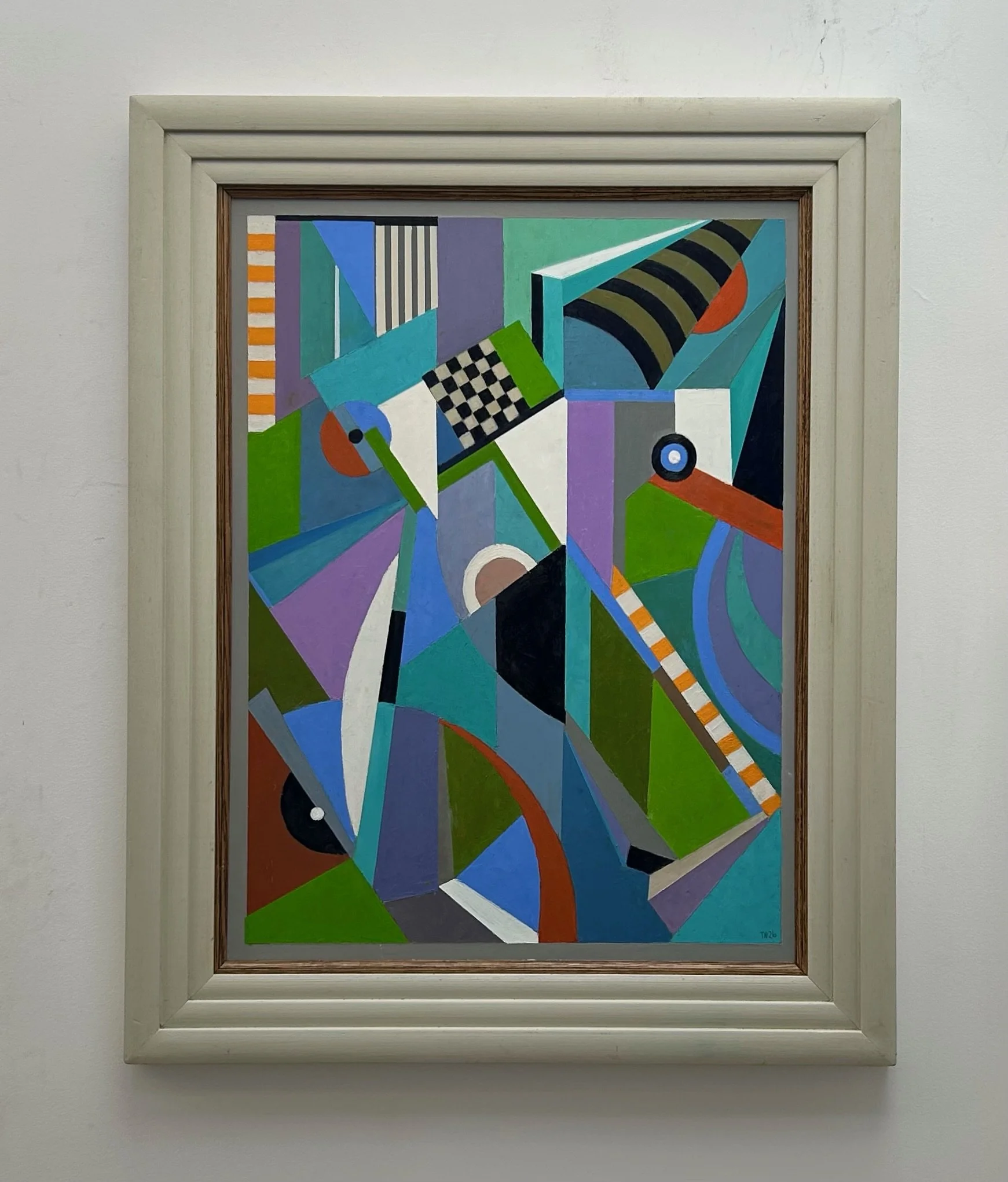
Metropolis - New York (Height 74 cms x Length 93 cms) 🔴
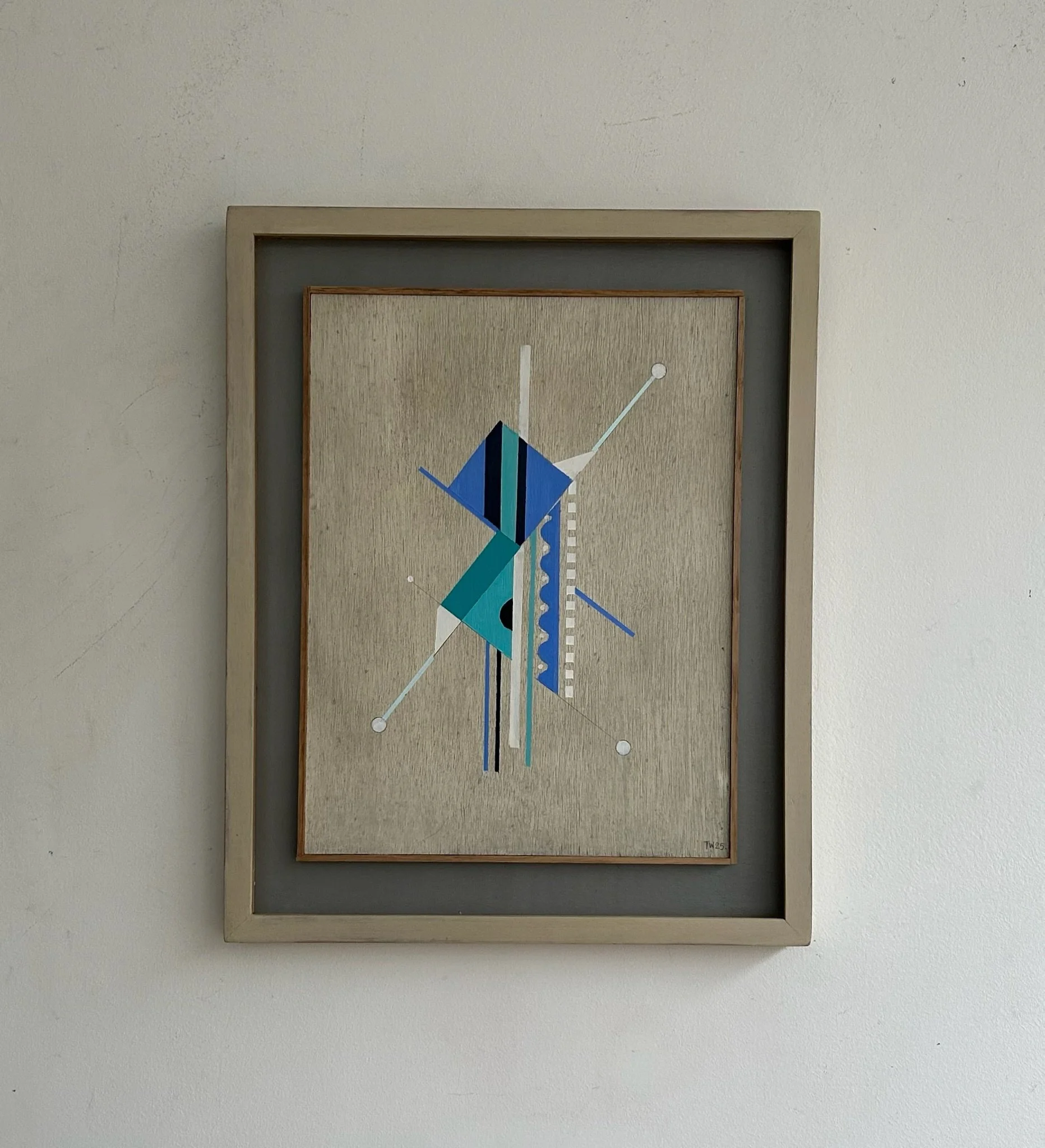
Orthogonal Blue (Height 54 cms x Length 44 cms)
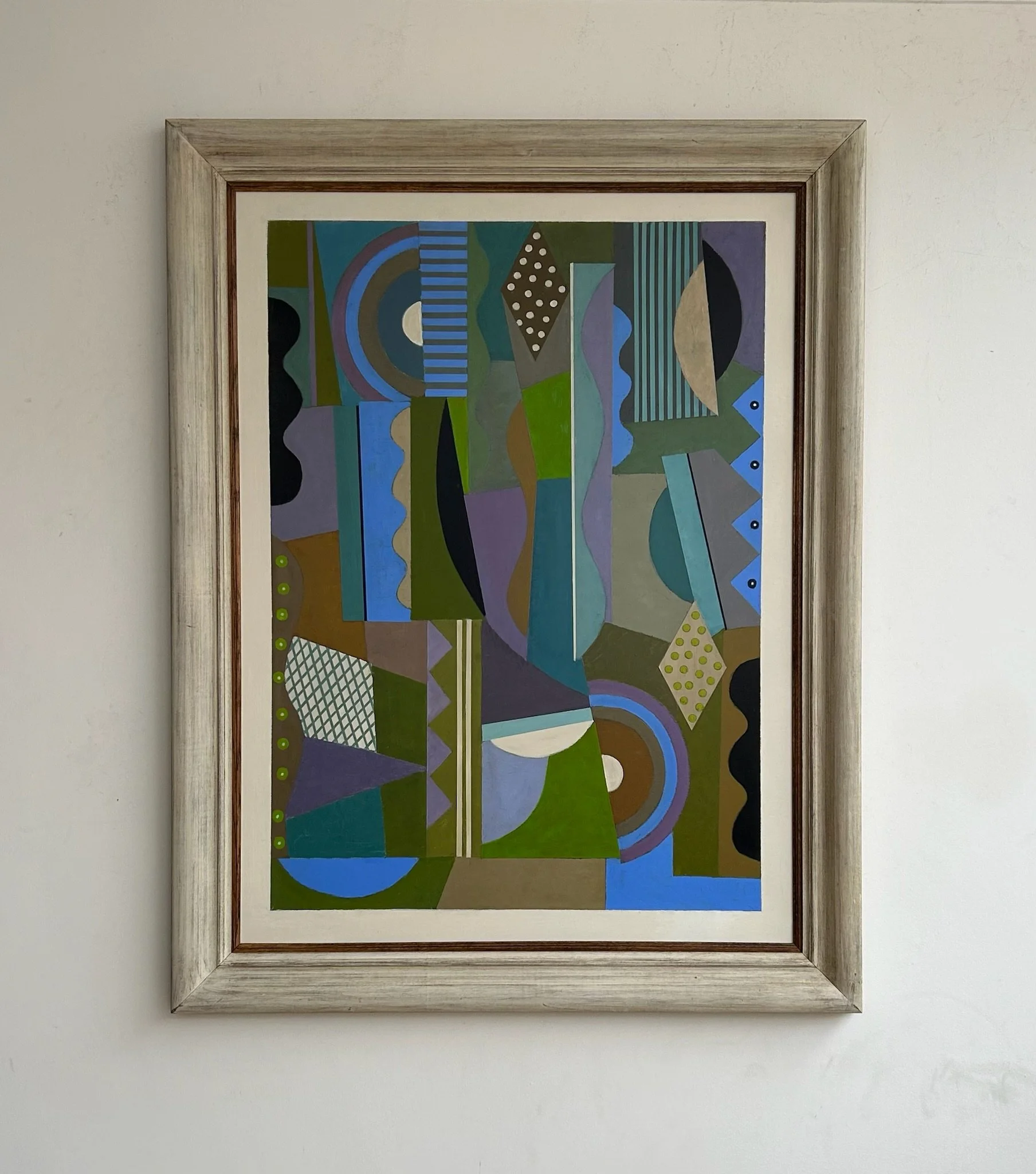
Resplendence (Height 138 cms x Length 110 cms)
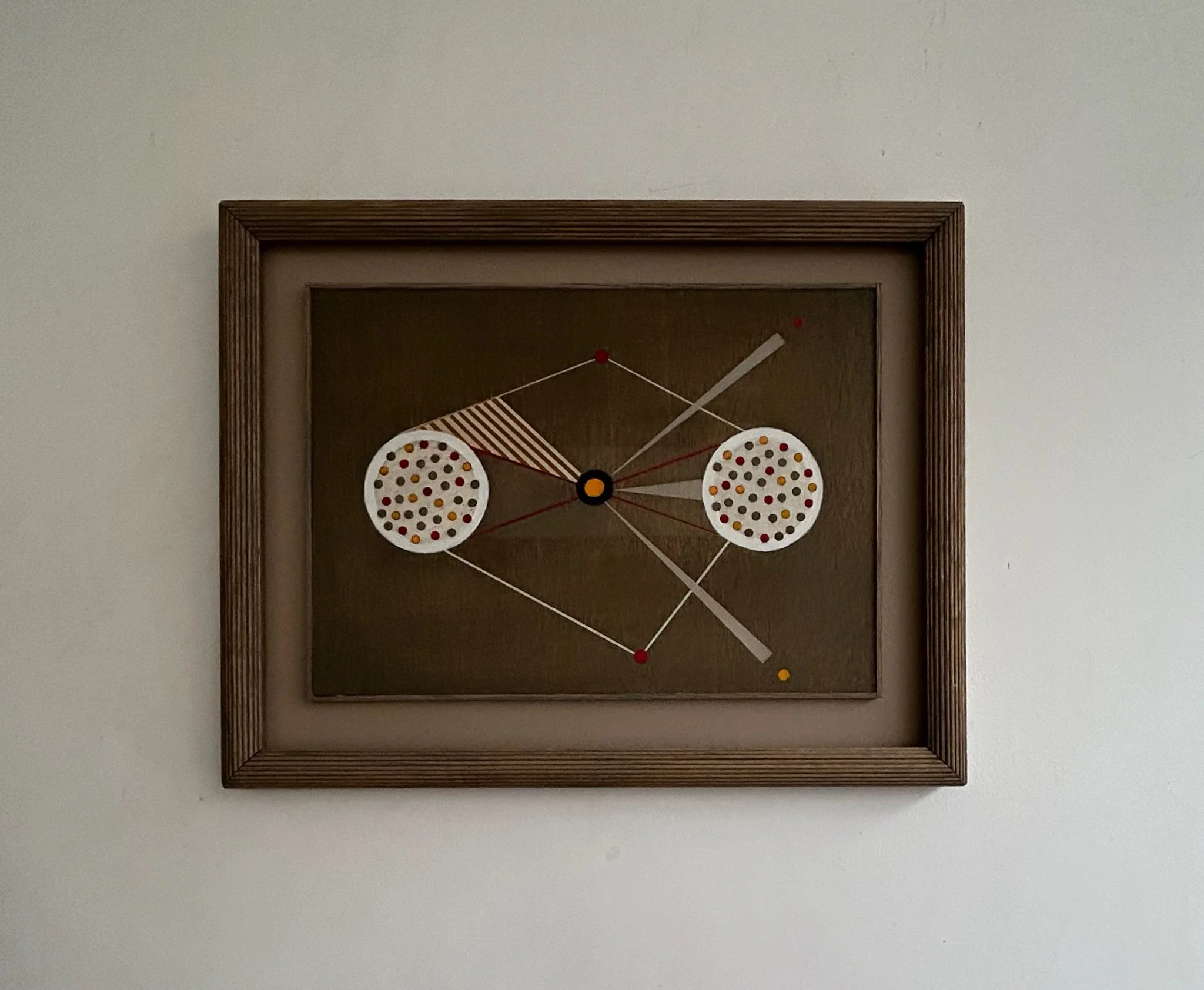
Lunar Parity Oil on panel (Height 52 cms x Length 67 cms)
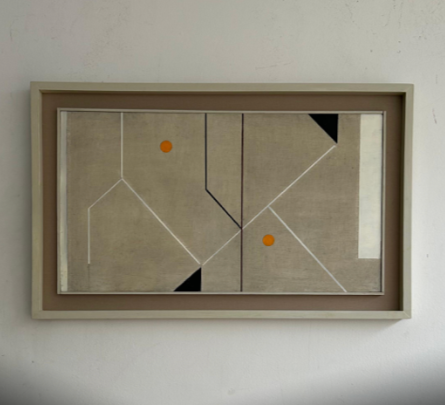
Yellow Parallel (Height 70 cms x Length 43 cms)
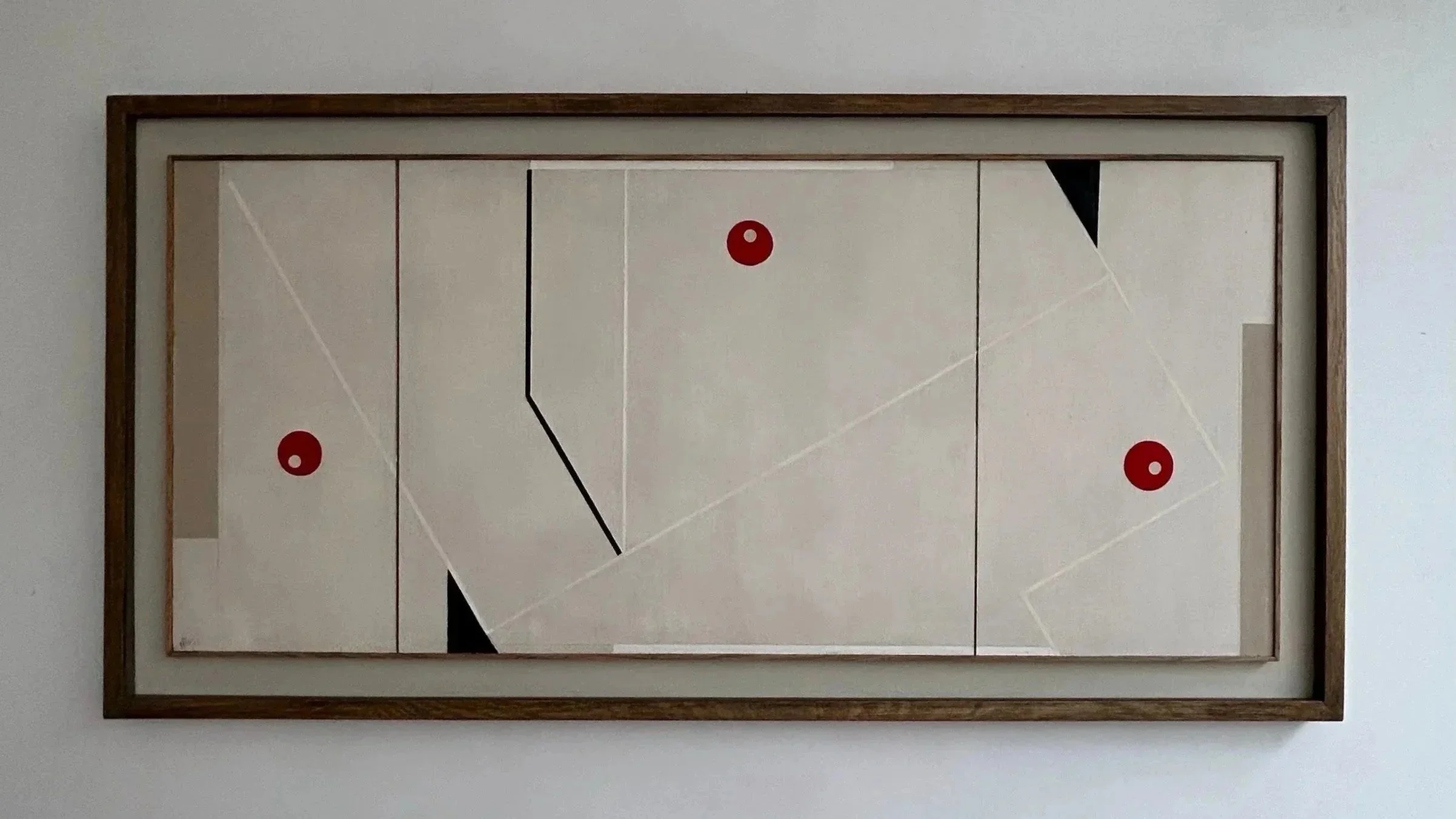
Red Lateral Rotation (Height 125 cms x Length 63 cms)
Tim Woolcock’s abstract paintings form a distinct and quietly powerful strand within his practice, running in parallel with his landscape works yet pursuing a more distilled visual language.
Language of geometry and structure
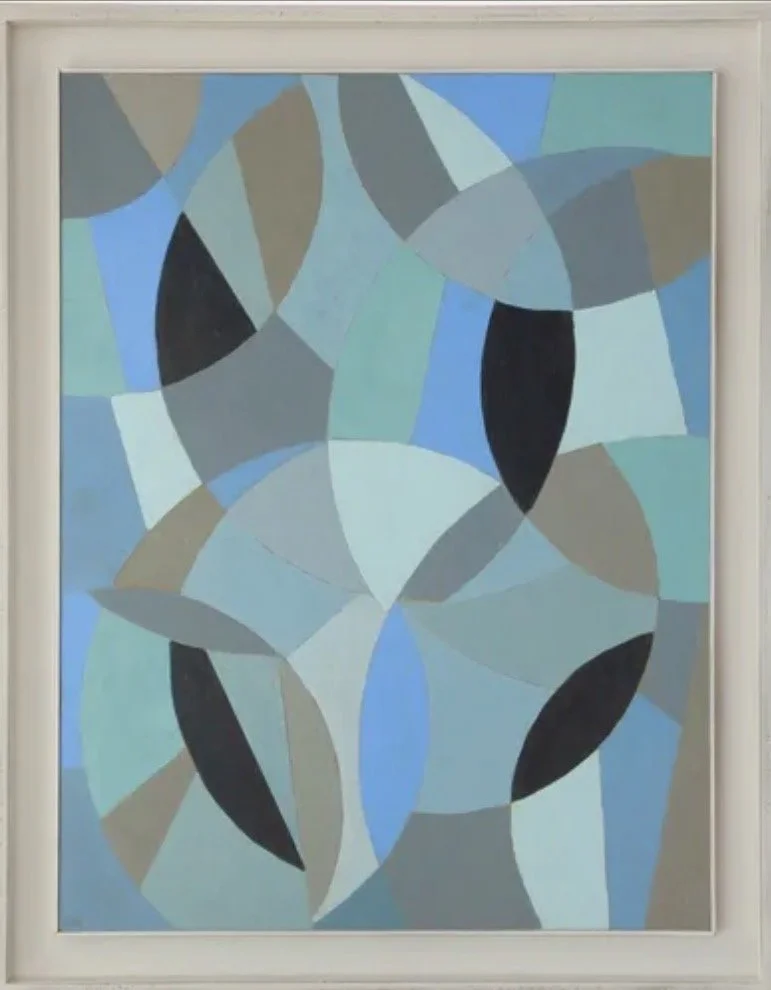
In the abstract canvases, Woolcock builds compositions from interlocking harmonious geometric forms that act almost as an armature for colour and light. Squares, lozenges and triangles often appear as primary generators of the image, shapes chosen precisely because they “hold their own” in space and create a poised internal tension. These elements are not decorative incident; they function as structural chords, establishing a sense of equilibrium that recalls the clarity of mid twentieth century British abstraction, while remaining unmistakably his own.
Colour as emotional register
Colour is the great carrier of emotion in these abstract works, operating less as description and more as atmosphere. Harmonies of saturated blues, turquoises and ochres unfold in carefully calibrated relationships, creating paintings that feel both measured and lyrical. Viewers often speak of a meditative serenity in the way one tone presses against another, a quality that aligns with Woolcock’s interest in Zen and a contemplative, ego‑less approach to painting.
Line, surface and rhythm
Across the abstract boards, line appears as a tensile, lyrical element that threads through blocks of colour, occasionally fractured into syncopated rhythms. Edges are rarely mechanical; they are scored, incised or lightly abraded, so that the painted surface acquires a tactile presence and a sense of having been worked and reconsidered over time. This quiet drama of contour and surface activates the geometry from within, giving the paintings a musical pulse rather than a purely static order.
Abstraction and the idea of place
Although these works are formally non‑representational, many retain a distant memory of landscape, architecture or even still life, held in suspension within the abstract language. Force fields of interlocking forms can suggest horizon lines, constellations, pathways or stacked facades, a reflection of Woolcock’s enduring engagement with the British and Irish countryside and the wider natural world. The result is a kind of abstracted topography of experience, in which external observation and interior reflection coexist.
Poise, influence and independence
Art historically, Woolcock’s abstractions sit in conversation with the Modern British and St Ives traditions, and with the planar intelligence of Cubism, yet they resist pastiche. Critics have noted the internal harmony of scale and proportion in these works, where every interval between forms feels weighed and necessary, creating paintings that invite slow looking rather than quick consumption. In recent years this abstract language has become increasingly refined and confident, yielding works that are at once serene and dynamic and that stand as a central, defining contribution to his oeuvre.
Reliefs
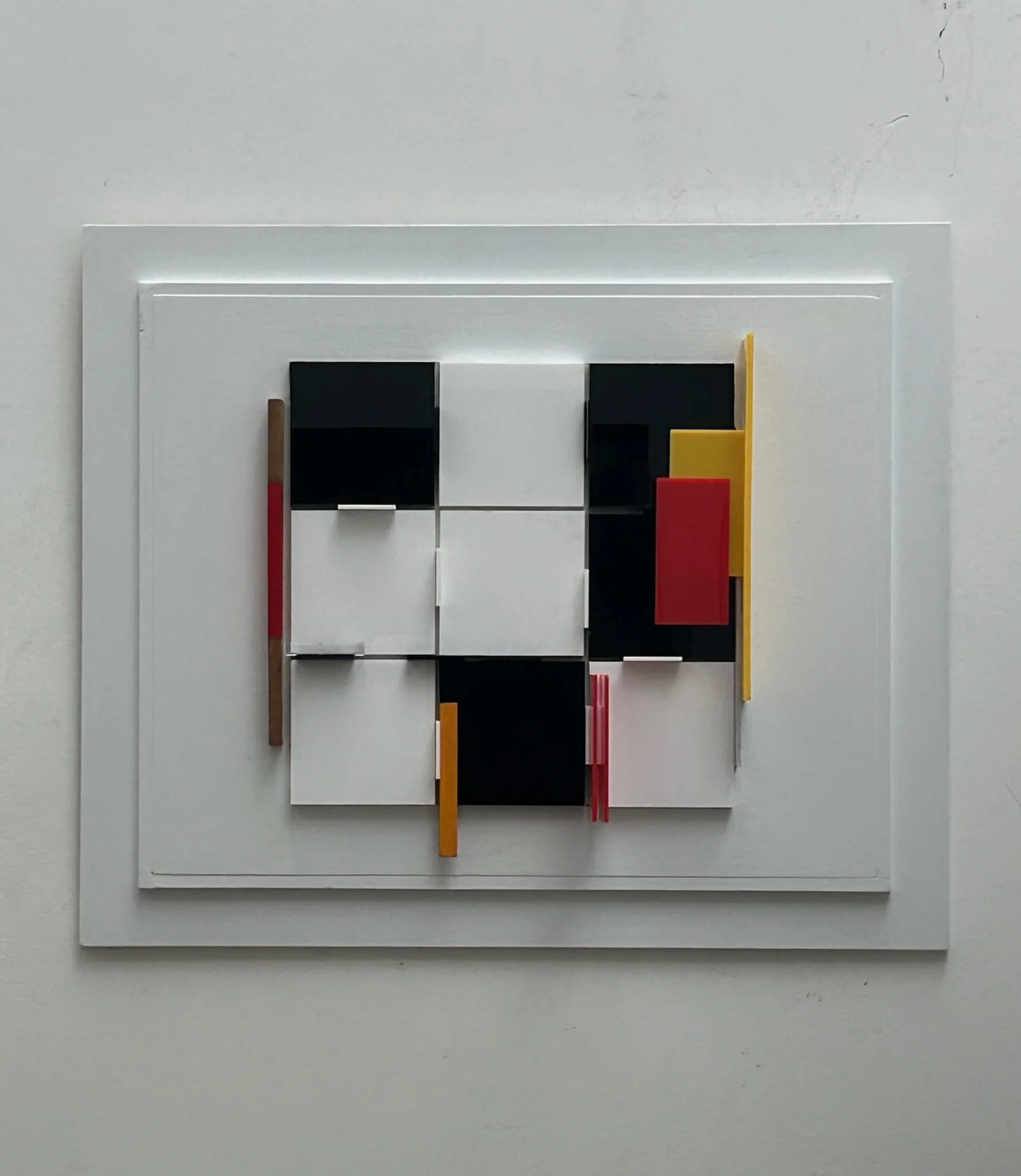
Construct ll (Height 60cms x Length 50cms)
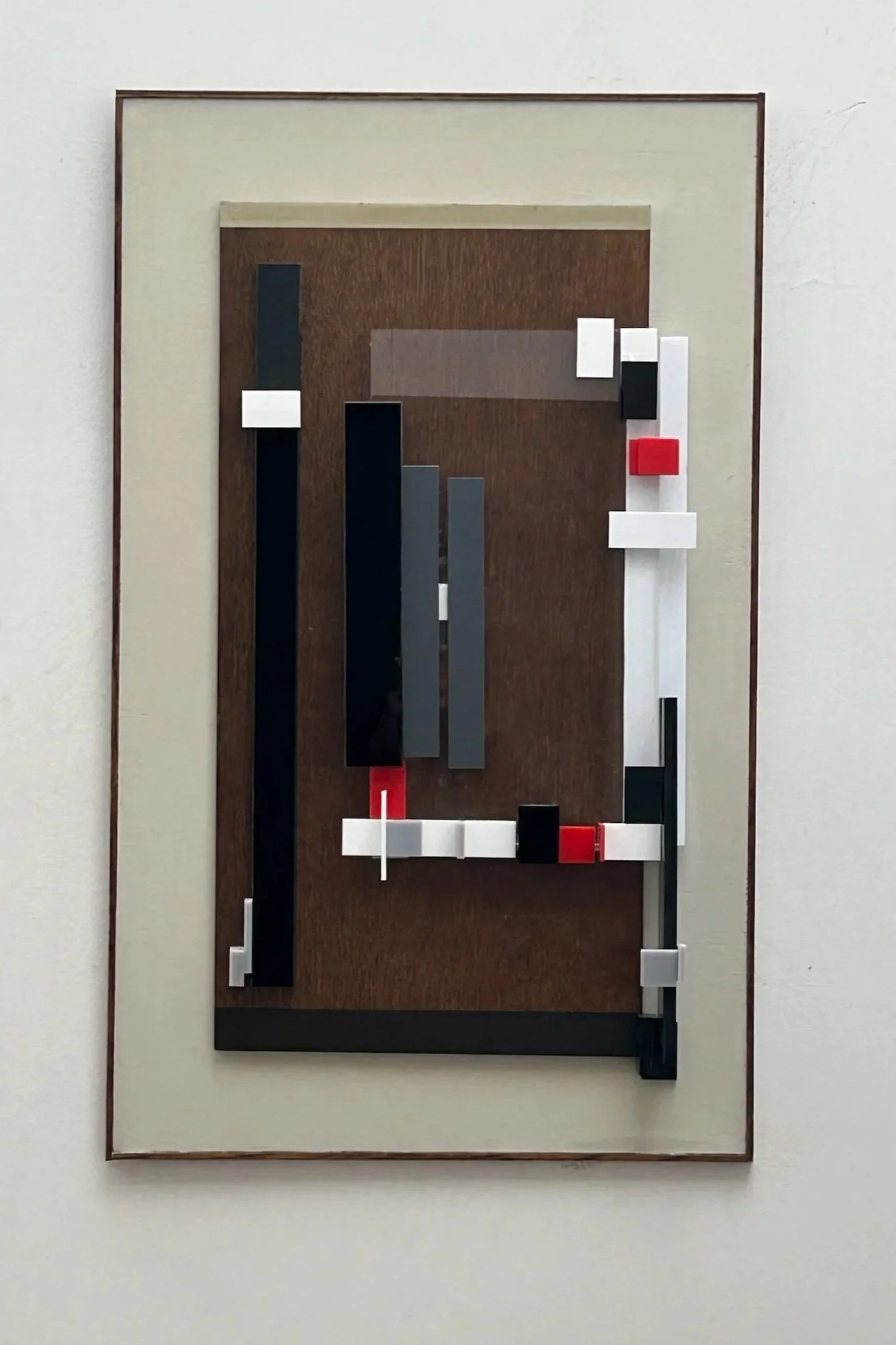
Metropolis (Height 74cm x Length 45cms)
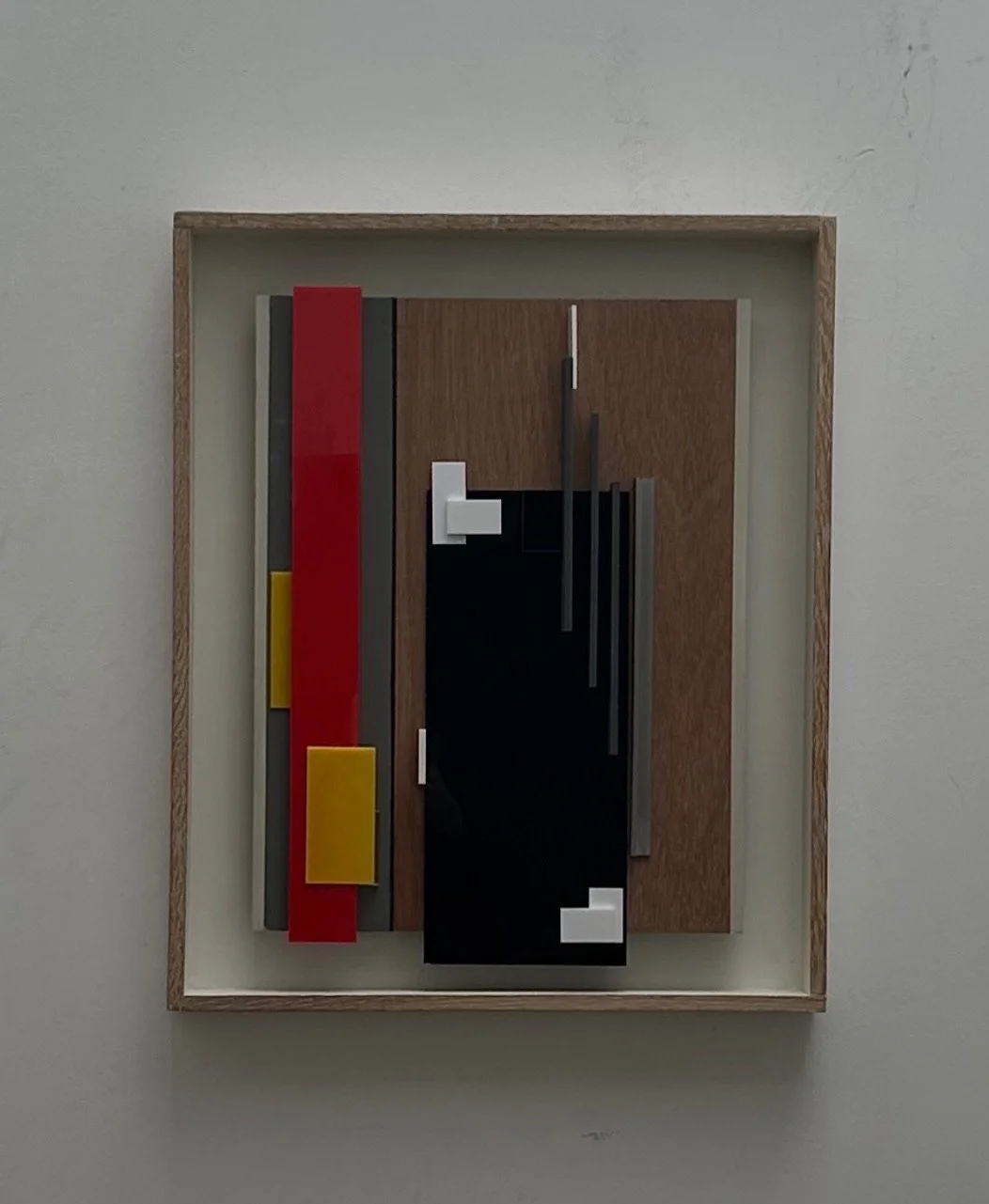
Urban Amalgam (Height 48cms x Length 58cms)
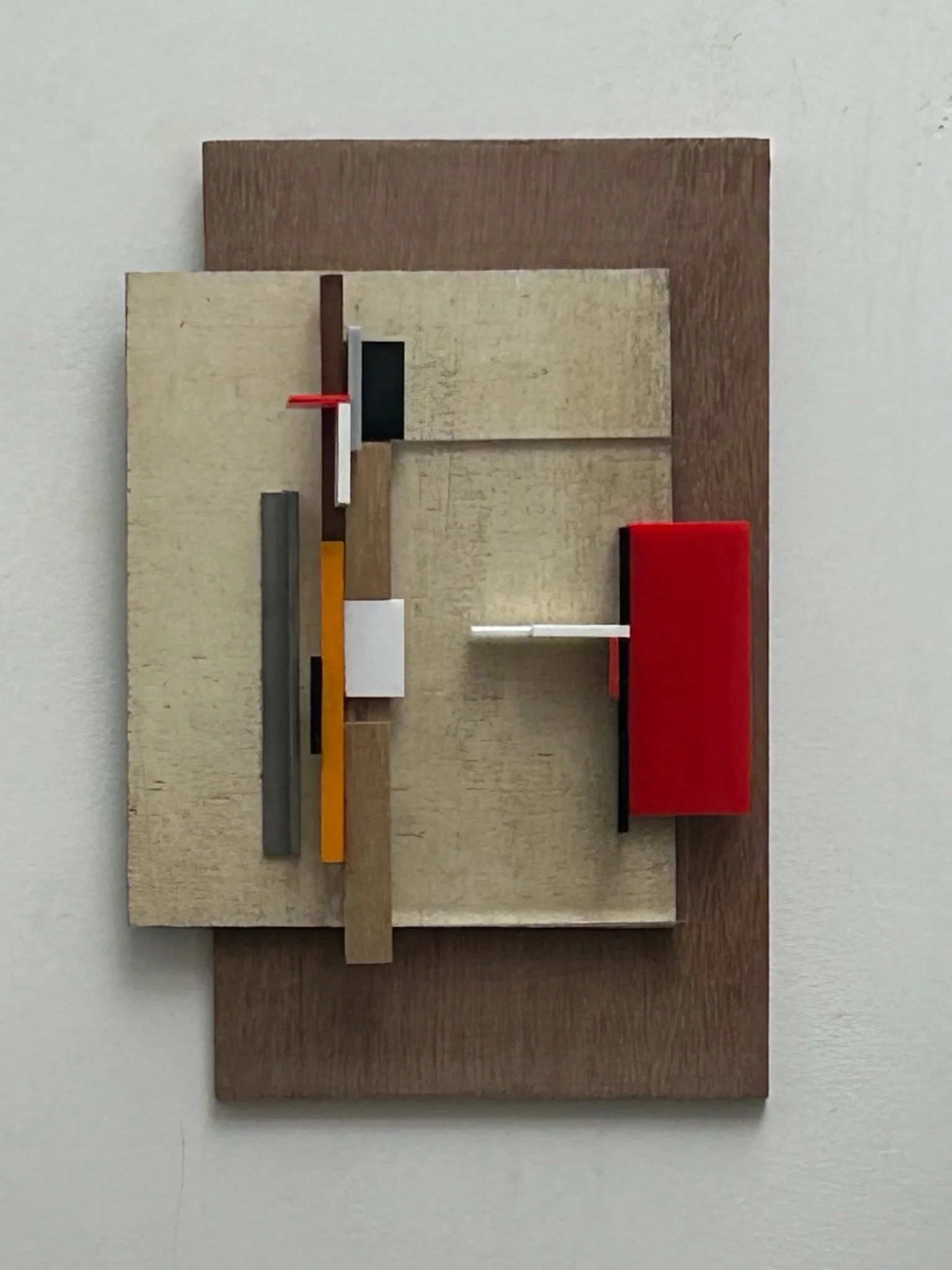
Red construct I (Height 27cms x Length 40cms)
Artist Note
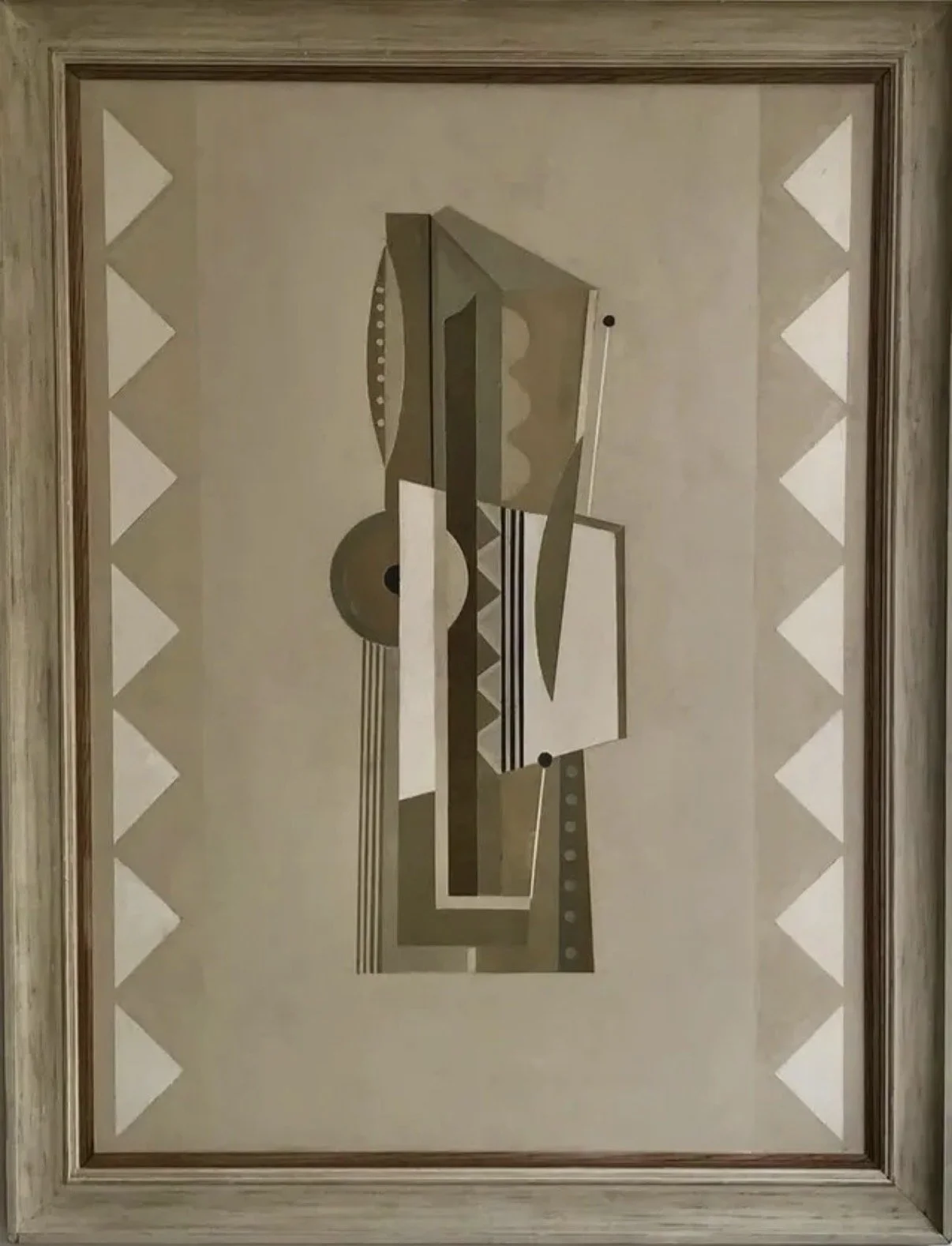
Recently I decided to turn my attention to creating some relief works incorporating perspex, oak, steel and panel. I completed a few of these in the 1980s but at that point had decided not to continue producing them as my attention was being drawn towards painting.
The term 'constructive reliefs' would perhaps be an appropriate appellation to these recent pieces and such works were prevalent in the U.K. in the 50s and 60s but many artists had to visit Europe due to the general lack of strong interest in their endeavours. There are infinite arbitrary permutations in this process. I've found it's not an opposition to painting but more of cohabitation of the two.
Reliefs can also produce light and shade due to the three dimensional aspect of their construction and can result in a clear concise statement and highlight the process more effectively. Orthogonal angular forms can articulate a certain counter balancing resulting in a peaceful harmony and a dynamic wholeness eventually.There are no mathematical principles inherent in the reliefs but this was not the case when several were based on numerical principles in the 1950s and 1960s.
I've tended at times to abandon the principle of bilateral symmetry but nevertheless have enjoyed working with the different materials which have varying texture. I found that the new reliefs, when observed for a while possess a peaceful harmony which counter balances the view that they are urbanistic...and detached
There are several emphatic contrasts in the pieces which have, I've discovered resulted in quite a dynamic harmony.
Tim Woolcock, November 2025
Commissions
Tim is happy to discuss making works for specific spaces and interiors. If you would like inspiration you can look through both his available work and his sold work below. Please email the studio with an outline and they will get back to you.
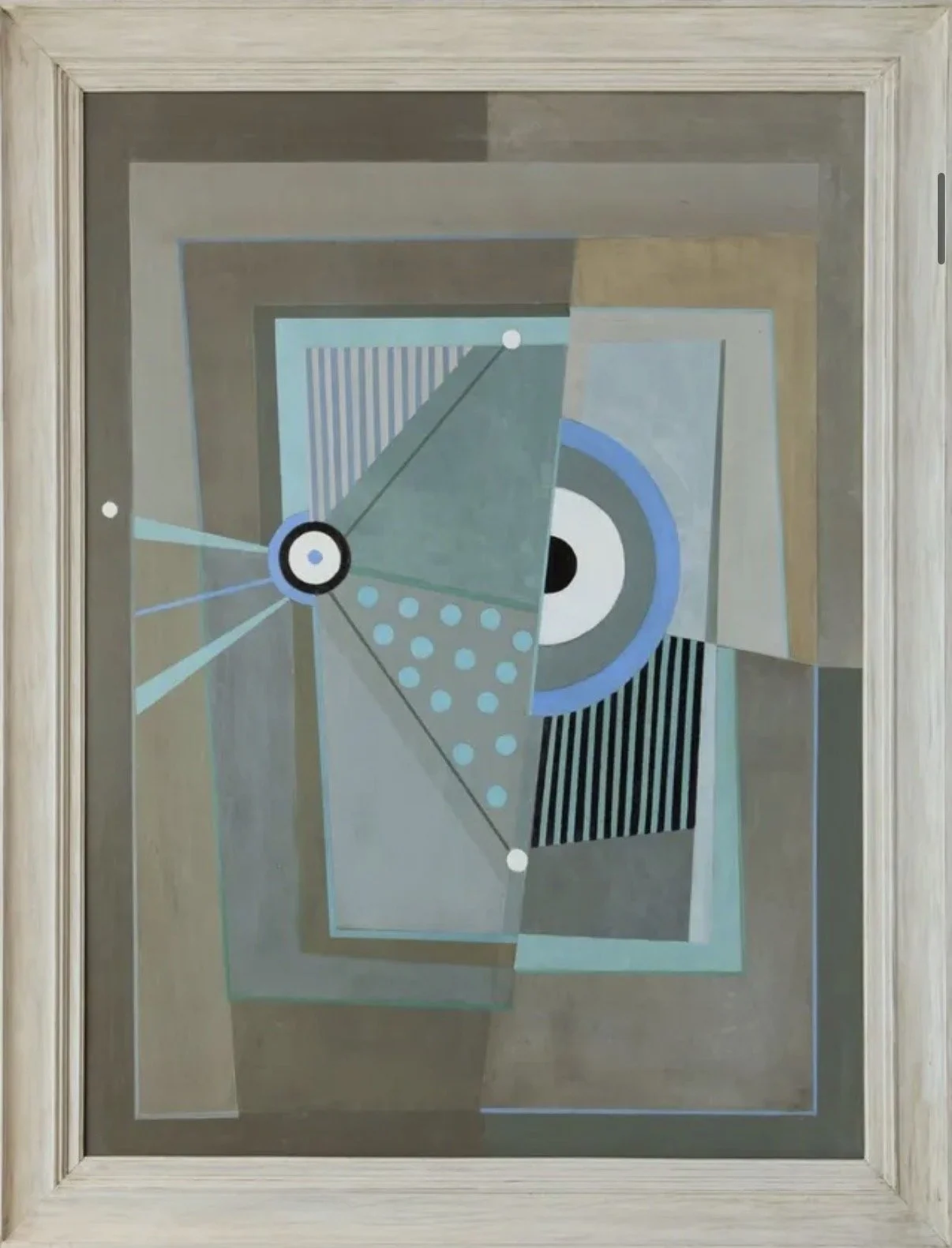
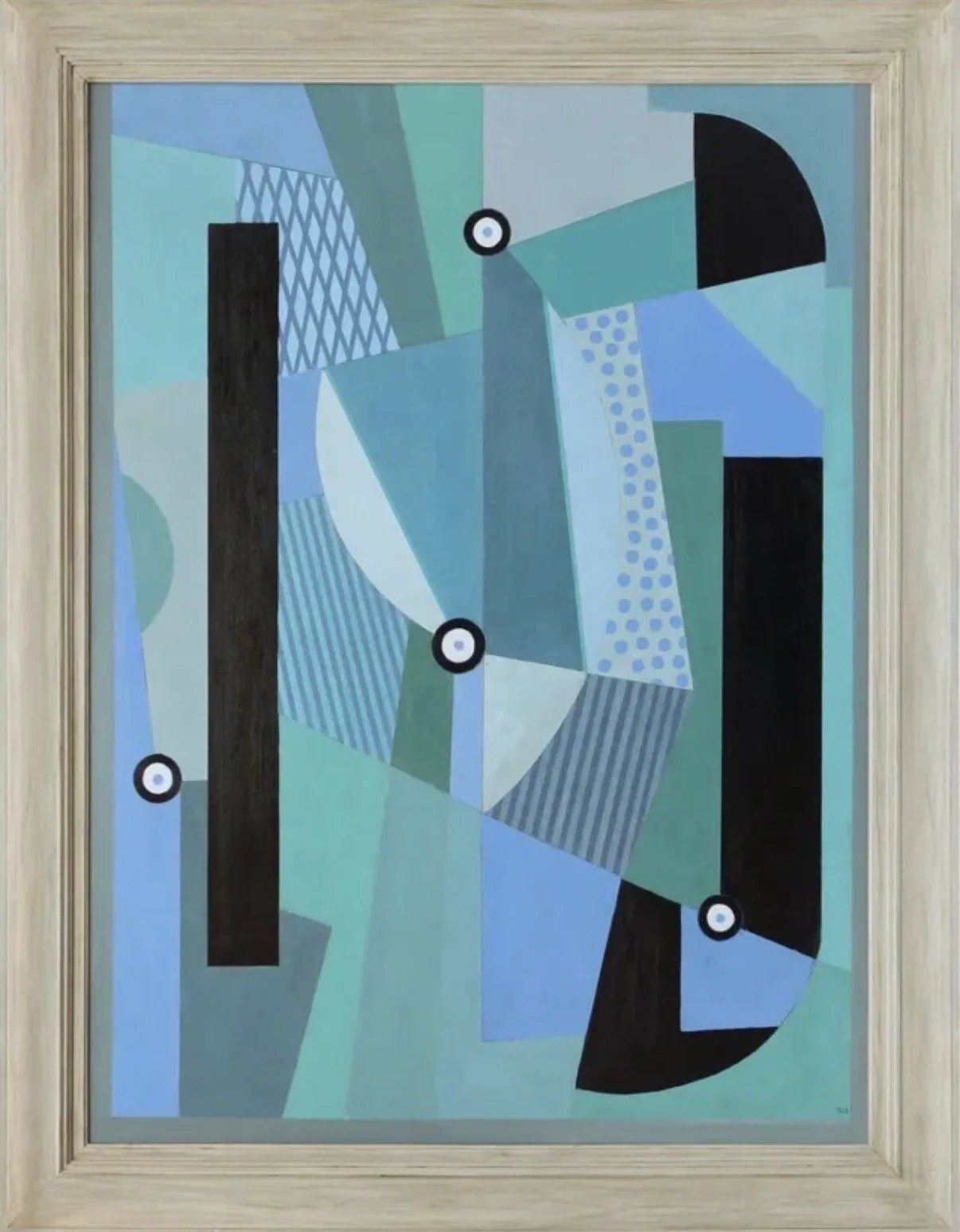
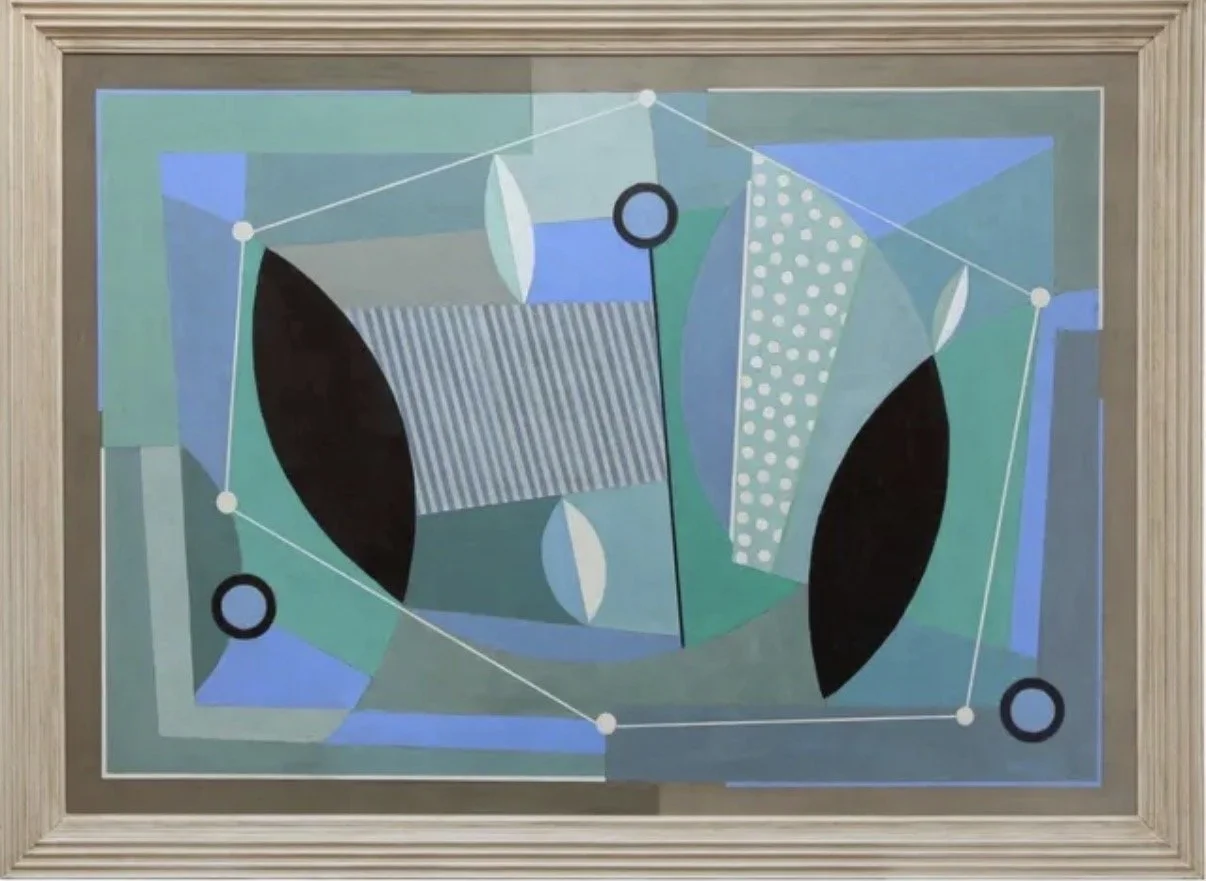
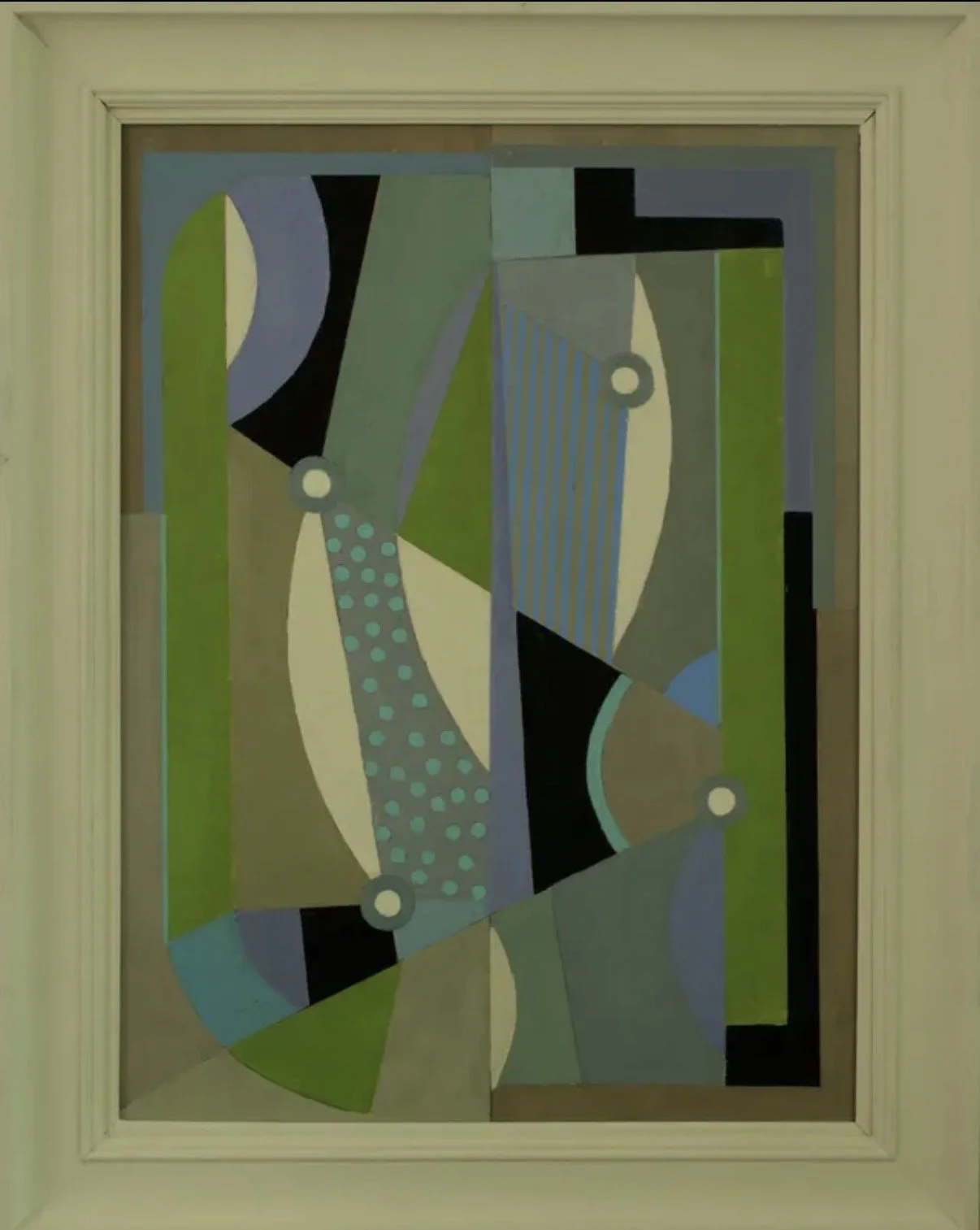
Sold Works
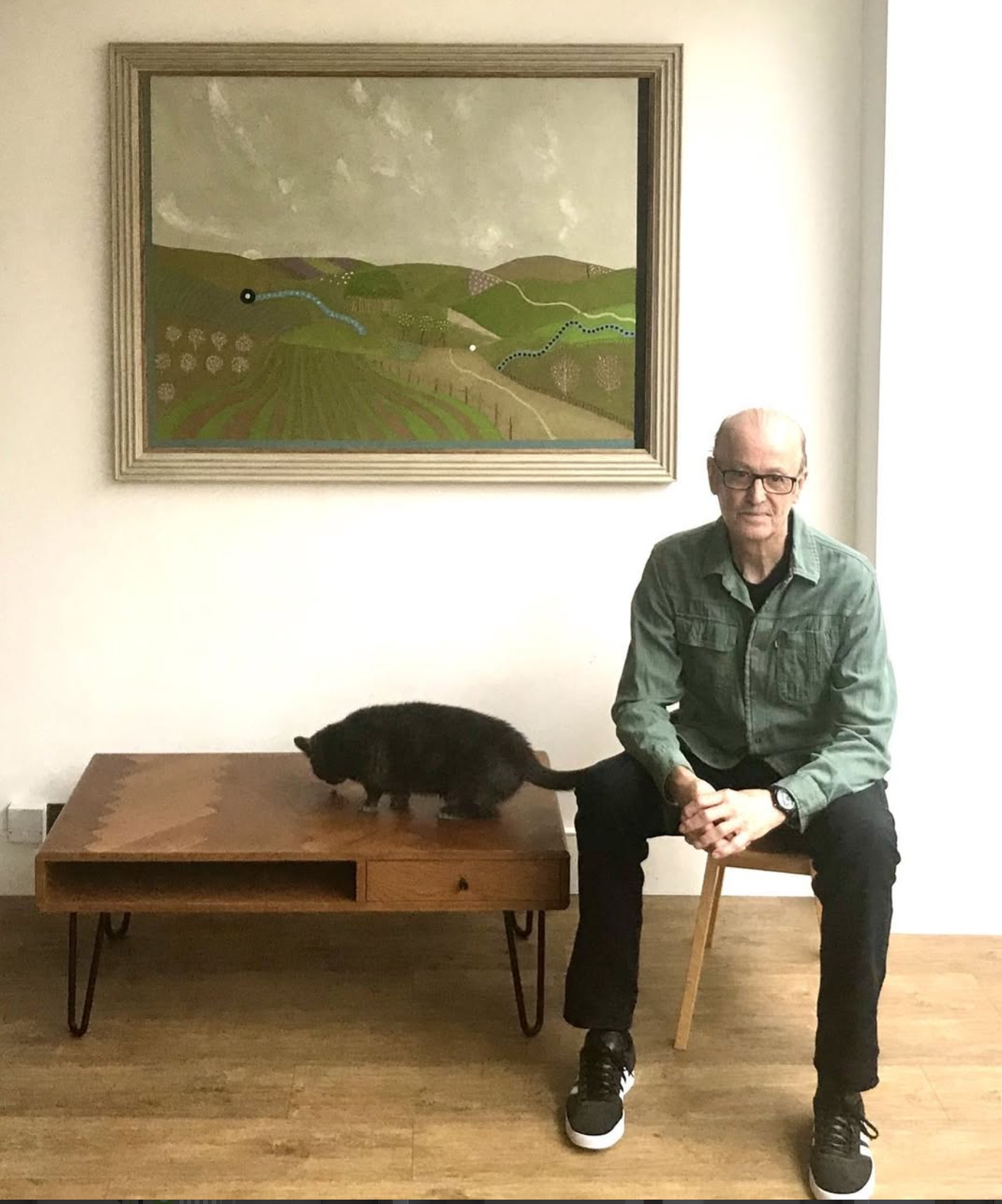
Practice and Materials
Woolcock only uses oil paint made by Michael Harding. Michael Harding’s hand-made paints represent one of the most uncompromising commitments to excellence in contemporary artist materials. These are not mass-produced tubes but rather the culmination of meticulous craft, philosophical rigour and an unflinching refusal to compromise pigment quality for commercial expedience. The origin story is one of artistic necessity meeting material frustration. In the early 1980s, Harding was himself a working painter and found the commercial paints available to him incapable of achieving the luminosity and vibrancy he observed in the work of the Old Masters. Rather than accept this limitation, he began formulating his own colours using the very techniques that artists employed centuries ago, before the invention of the collapsible tube in the 1840s. This was no dilettante experiment: it was an act of professional defiance against the industrialised compromise that characterises most paint manufacture.
Coupled with choosing paints that ensure the vibrancy of his work will last, he paints directly onto panels, so there are no preparatory sketches, which we believe maintains the freshness and flow of the work. The panels are made from the highest grade marine ply, in the Gabon, to ensure long term stability.
Woolcock makes all of his own frames in his studio, maintaining artistic control over the final artwork. He often uses English Oak and other high quality profiles which are supplied by an independent artisan in Suffolk.
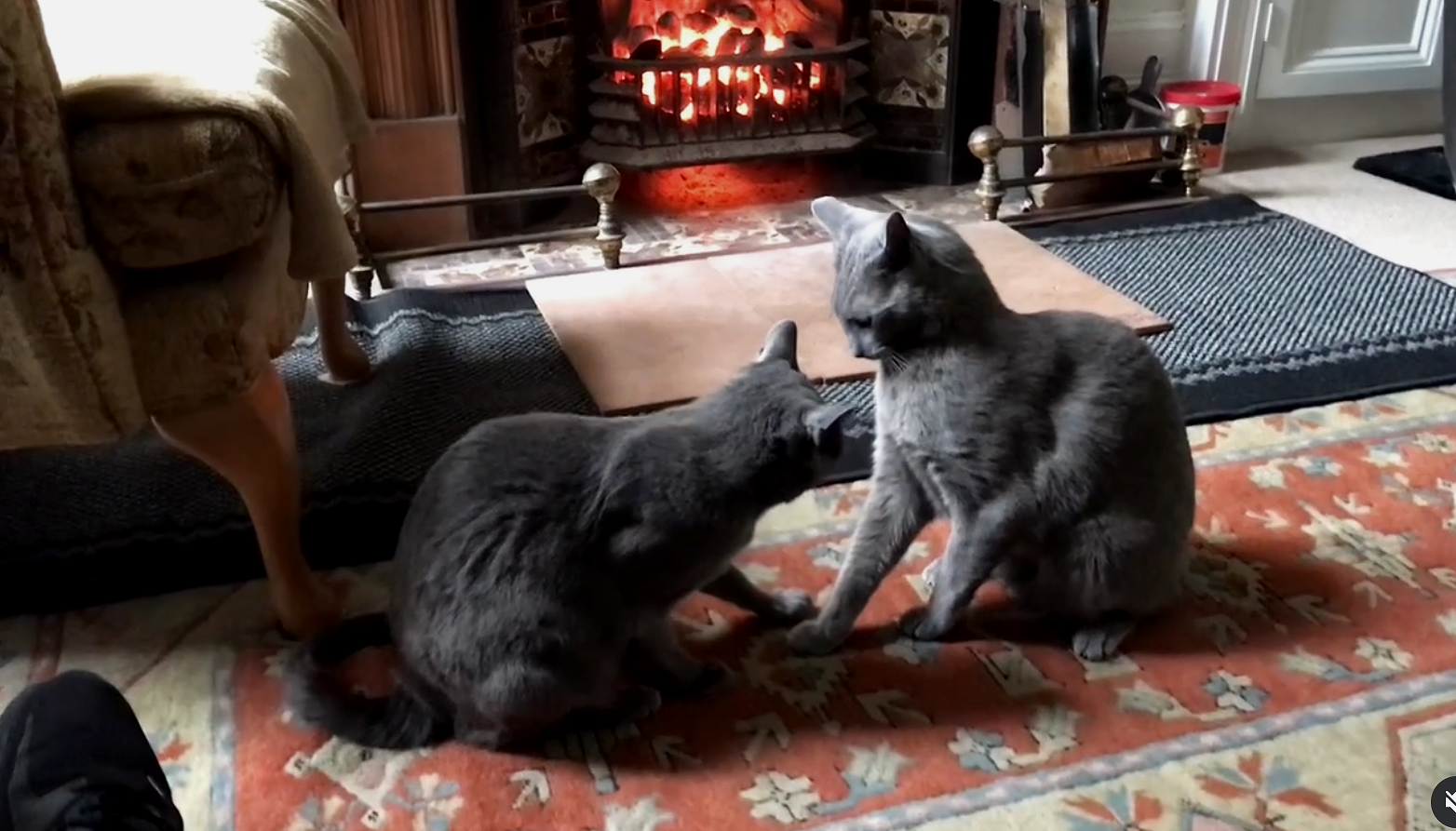
Studio companions
The studio is occupied by felines who are adored even if they appear later with splashes of colour in their fur from having been too involved in the process. Their wild curiosity a direct contrast to the precision in the work they disrupt.
The Studio is also often inhabited by Woolcock’s wife and children, who are already invovled in the protection and legacy of their father’s works.